Searching the Forest for Essential Oils
In Lubuk Bigau, a participatory experiment tested 15 locally identified plant materials. Twelve produced essential oils under the project’s trial conditions, offering a starting point for further research rather than a finished product.
The search began before the still was lit
Before an essential oil can be bottled, labelled or sold, someone has to ask a more basic question: which plants contain oil worth investigating?
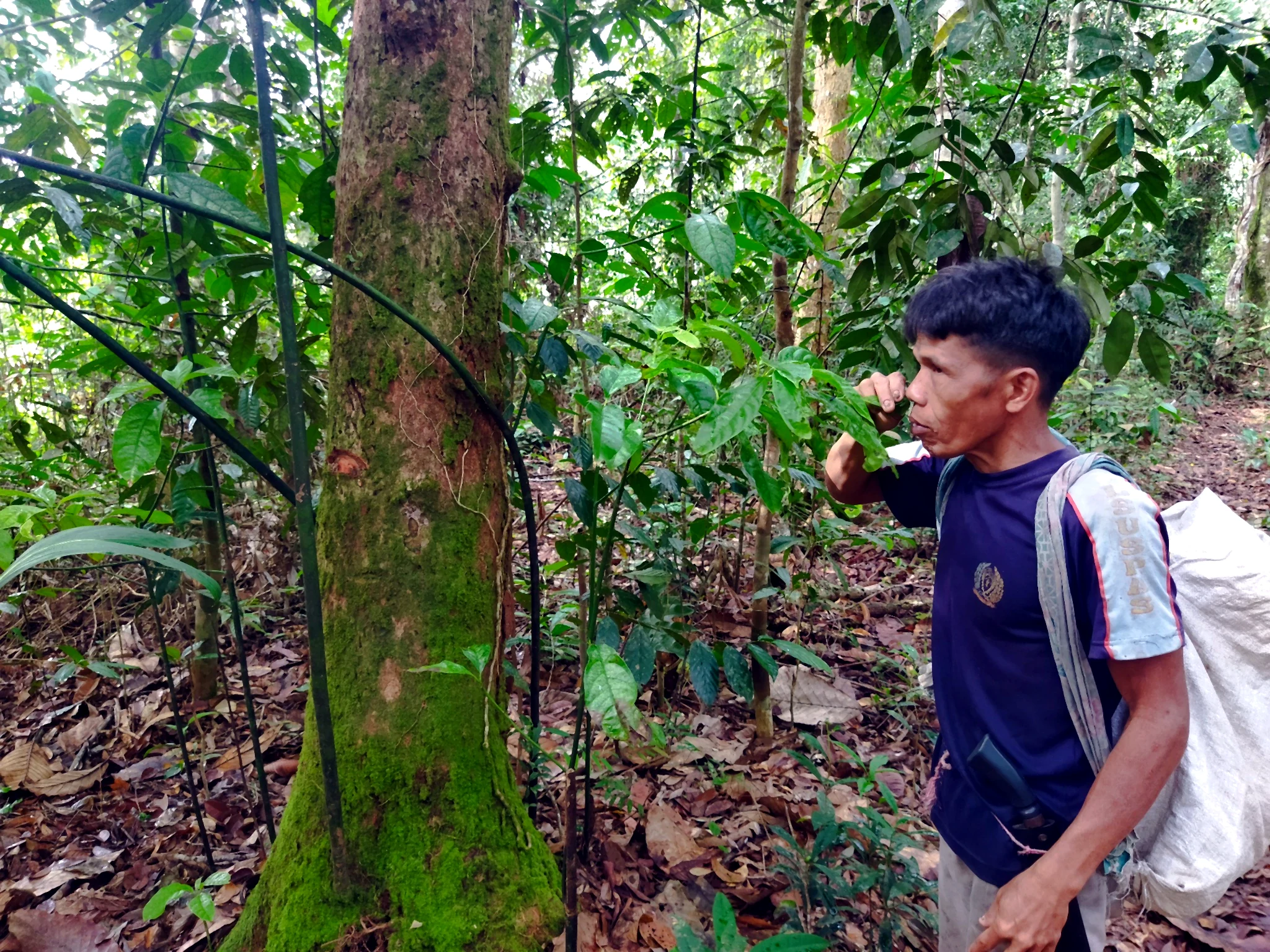
In Lubuk Bigau, that question led people beyond the usual starting point of product development. The work began with a discussion about plants found around the village and their possible use as sources of essential oils.
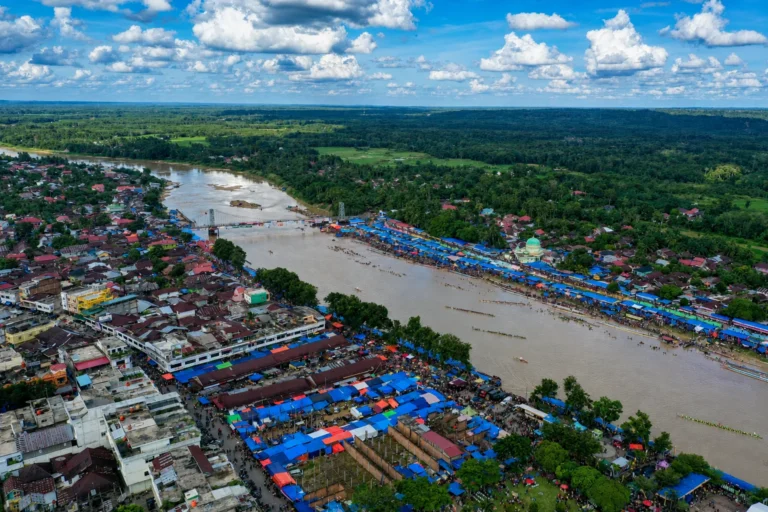
Lubuk Bigau lies in Kampar Kiri Hulu, close to the Bukit Rimbang Baling Wildlife Reserve. Forests and rivers are part of the village’s everyday surroundings, but turning a locally known plant into a useful product requires more than familiarity. It requires careful testing.
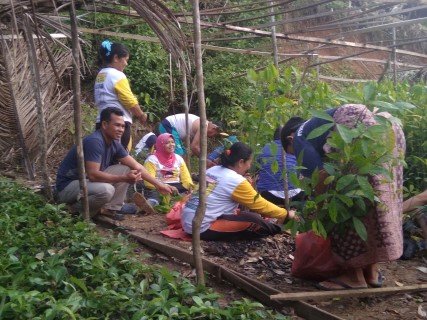
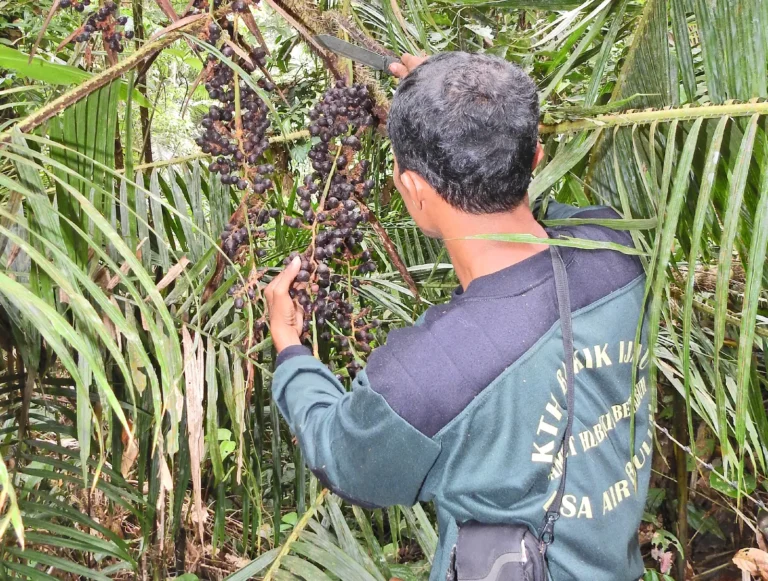
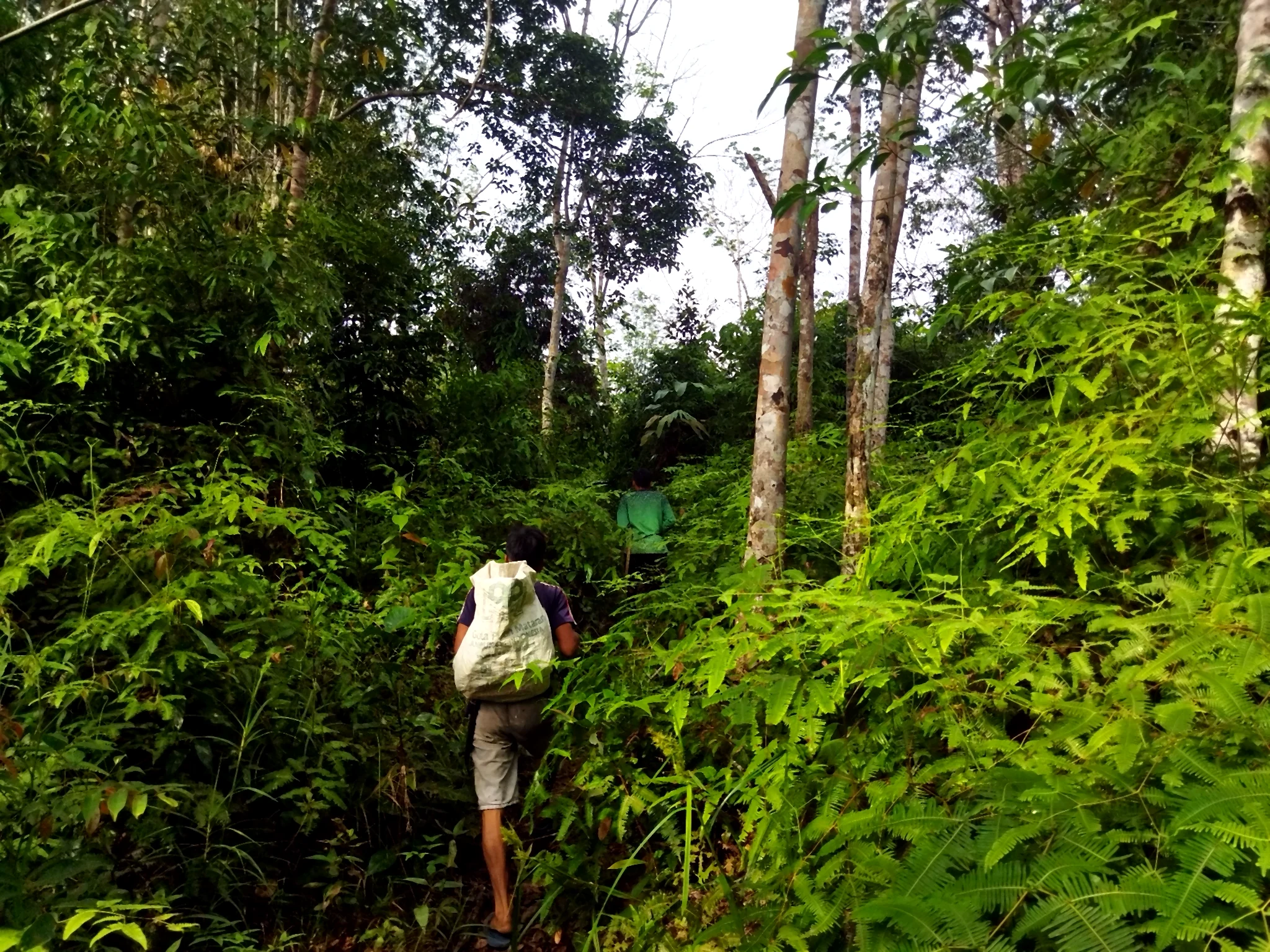
During a project implemented by Yayasan Hutanriau with support from LUSH Fresh Handmade Cosmetics in 2022 and 2023, community members discussed potential plant materials for essential-oil production. A group of young residents then helped collect materials identified for testing.
The process was practical and exploratory. There was no assumption that every promising plant would produce oil, or that every oil produced would become a viable product.
Fifteen materials, twelve early results
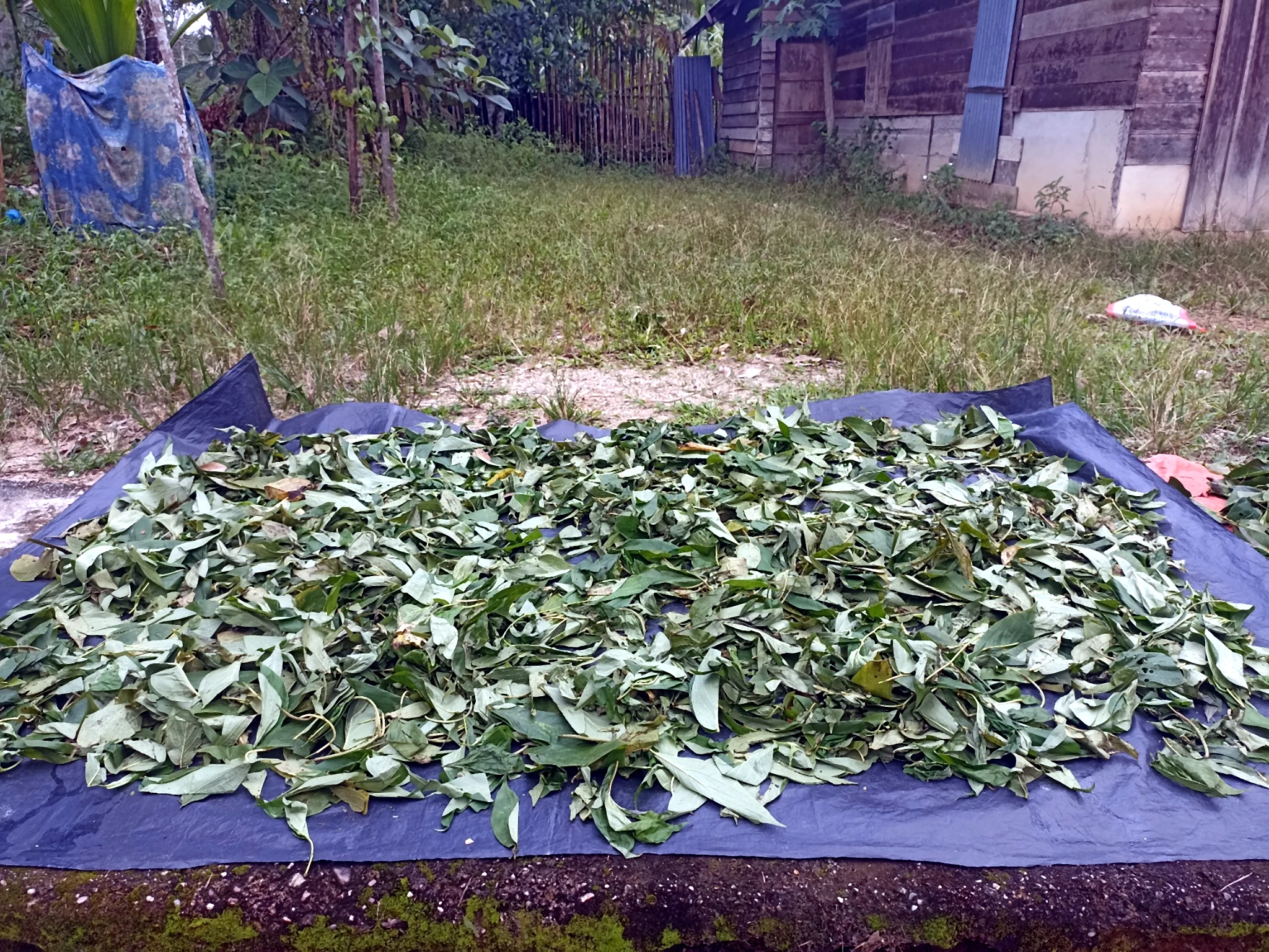
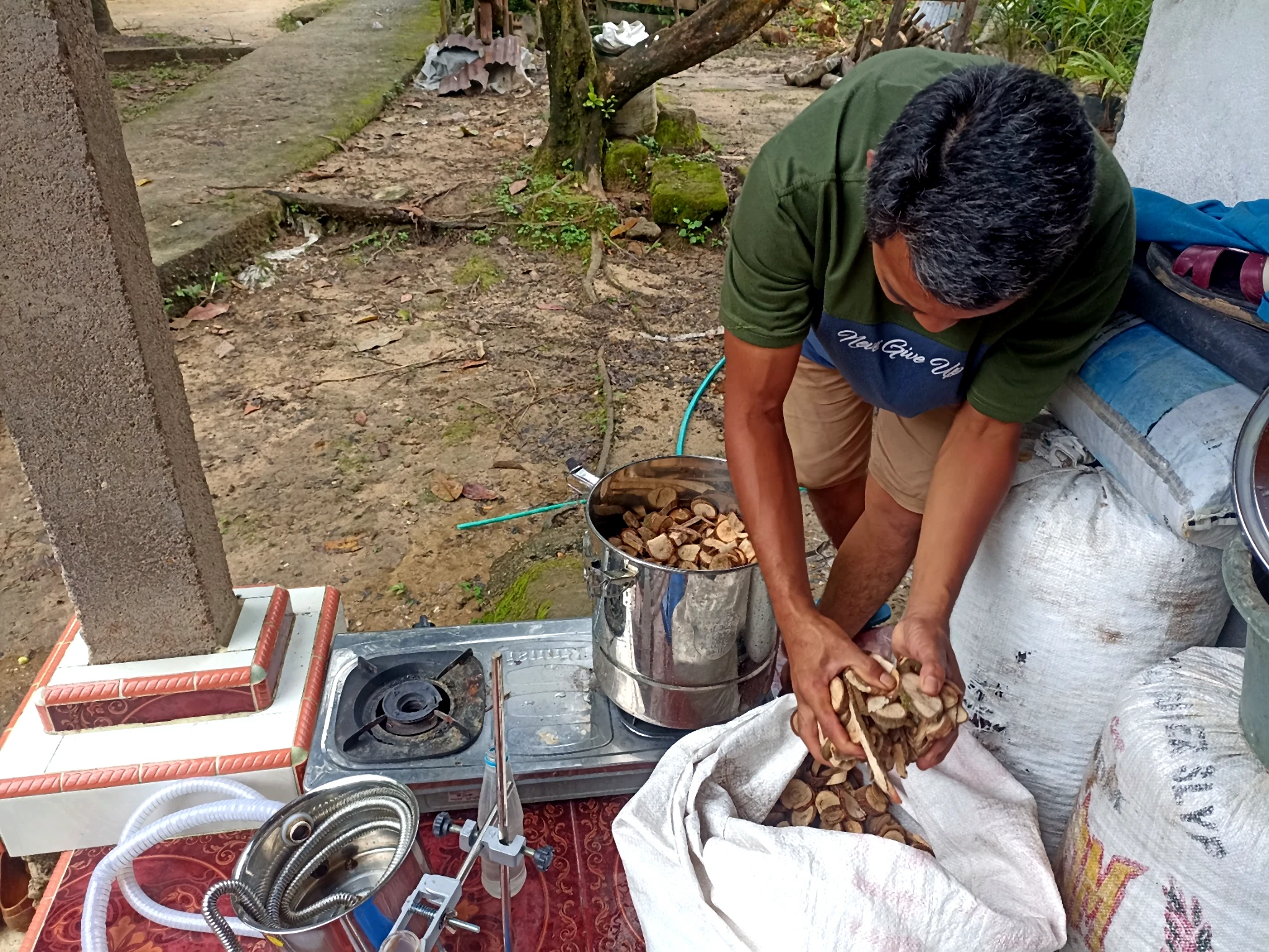
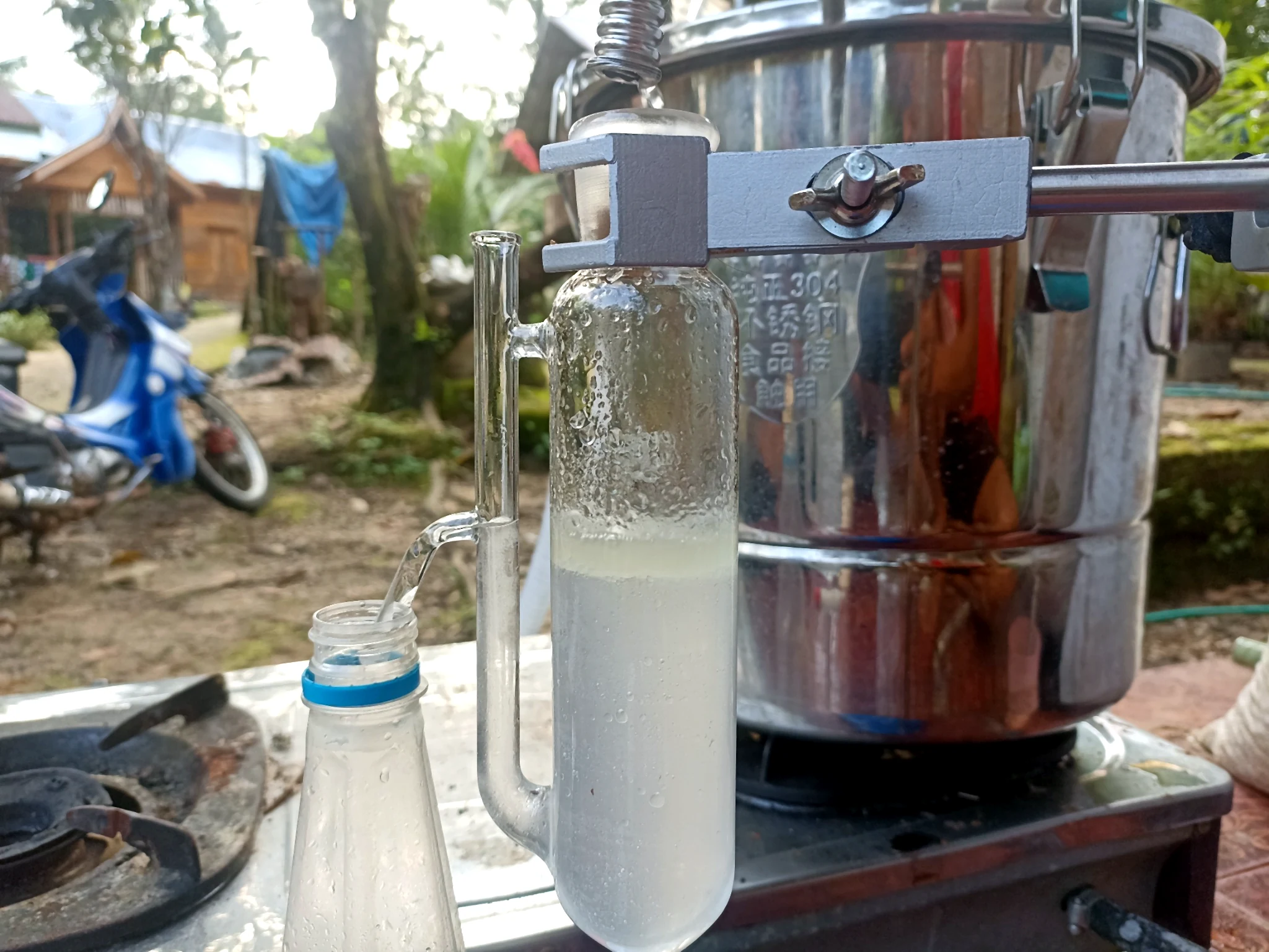
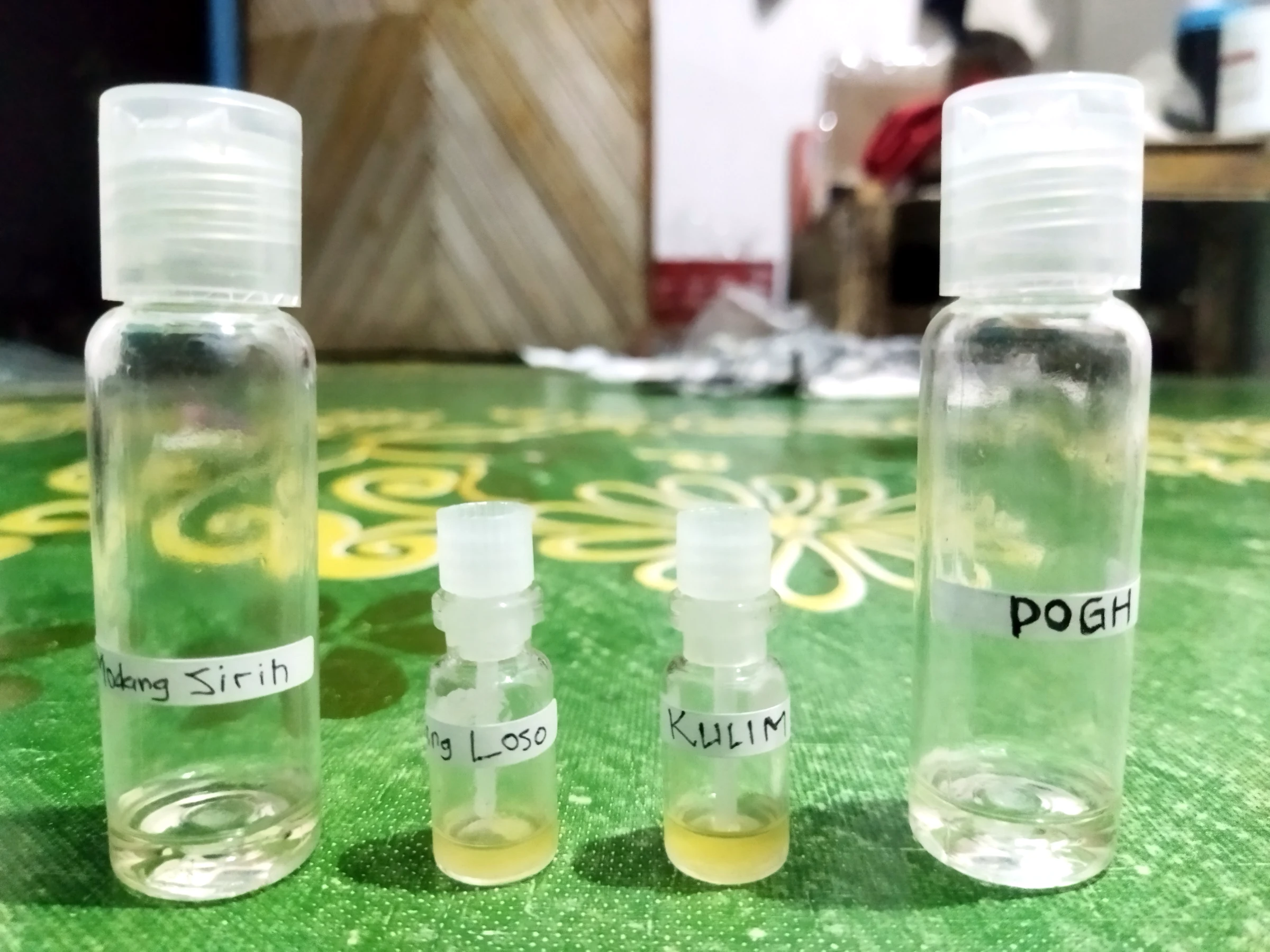
The collected plant materials were tested through small-scale distillation. Of the 15 materials tested, 12 produced essential oils under the conditions used during the project.
15
plant materials tested
12
produced essential oils under trial conditions
This was a useful result, but it was not the end of the research.
A plant material producing oil in an initial trial does not automatically make it suitable for commercial use. The quantity may be too small. The quality may vary between batches. The plant may be difficult to collect regularly, or harvesting it may place pressure on the surrounding forest. Its chemical composition, safety and possible uses also require further examination.
The trials did something more modest and more useful: they narrowed the field of enquiry. Instead of working only from assumptions, the participants had a preliminary set of results that could guide future testing.
Twelve materials had shown that they could yield oil. Three had not produced oil under the same trial conditions. Both findings mattered. Knowing what did not work helped avoid treating every aromatic or locally familiar plant as a ready business opportunity. Knowing what did work created a basis for asking better questions.
Local knowledge became part of the research
The experiment did not begin with a laboratory list brought into the village. It began with discussion, local observation and the participation of people who knew the surrounding area.
Community knowledge helped identify what should be examined. Distillation then provided a way to test those ideas. This combination matters. Local knowledge can point researchers and practitioners towards plants that might otherwise be overlooked. Practical testing can then help distinguish between an interesting possibility and a result that can be observed and repeated.
The involvement of young residents also placed them inside the research process. They were not simply attending a presentation about a finished product. They took part in locating plant materials and seeing what happened when those materials entered the distillation process.
The project report does not measure whether this experience changed participants’ knowledge or future livelihood choices. What it does document is a process in which community members contributed to identifying, collecting and testing locally available plant materials.
Producing oil is not the same as producing a livelihood
Essential oils are often discussed as an opportunity for communities living near forests. They can offer a way to add value to plant materials, particularly where products can be harvested or cultivated without clearing forest.
But the distance between producing a few drops of oil and maintaining a viable enterprise is considerable.
Further work would be needed to verify the plants botanically, measure oil yield, repeat the trials, assess product safety and understand the chemical properties of each oil. Any future development would also need to examine the availability of raw materials, responsible harvesting, cultivation options, production costs and market demand.
These questions are especially important in a landscape connected to a wildlife reserve. A product described as forest-compatible should not create new pressure through excessive or poorly managed harvesting.
The LUSH-supported project explored a possible livelihood pathway, but it did not establish that the tested oils were commercially ready. It also did not measure increased household income or demonstrate a reduction in pressure on the forest.
Those boundaries do not diminish the value of the experiment. They clarify what the work achieved and what remains to be done.
A beginning worth following
The trial in Lubuk Bigau produced a simple but useful body of evidence: 15 plant materials were tested and 12 produced essential oils under project conditions.
The next stage would require more patient work. Some materials may prove unsuitable after further testing. Others may warrant closer study. A smaller number might eventually have potential for safe products, responsible cultivation or carefully managed harvesting.
For Yayasan Hutanriau, the main lesson is that forest-based livelihood ideas should begin with both local participation and evidence. Community knowledge helps identify possibilities. Testing reveals which questions deserve to be pursued.
In Lubuk Bigau, the search began with plants collected around the village and a small-scale distillation process. The oils that emerged were not finished products. They were the beginning of a conversation about what the forest might offer, how that knowledge should be tested, and what responsible development would require.