ABOUT YAYASAN HUTANRIAU
From spatial analysis to field delivery
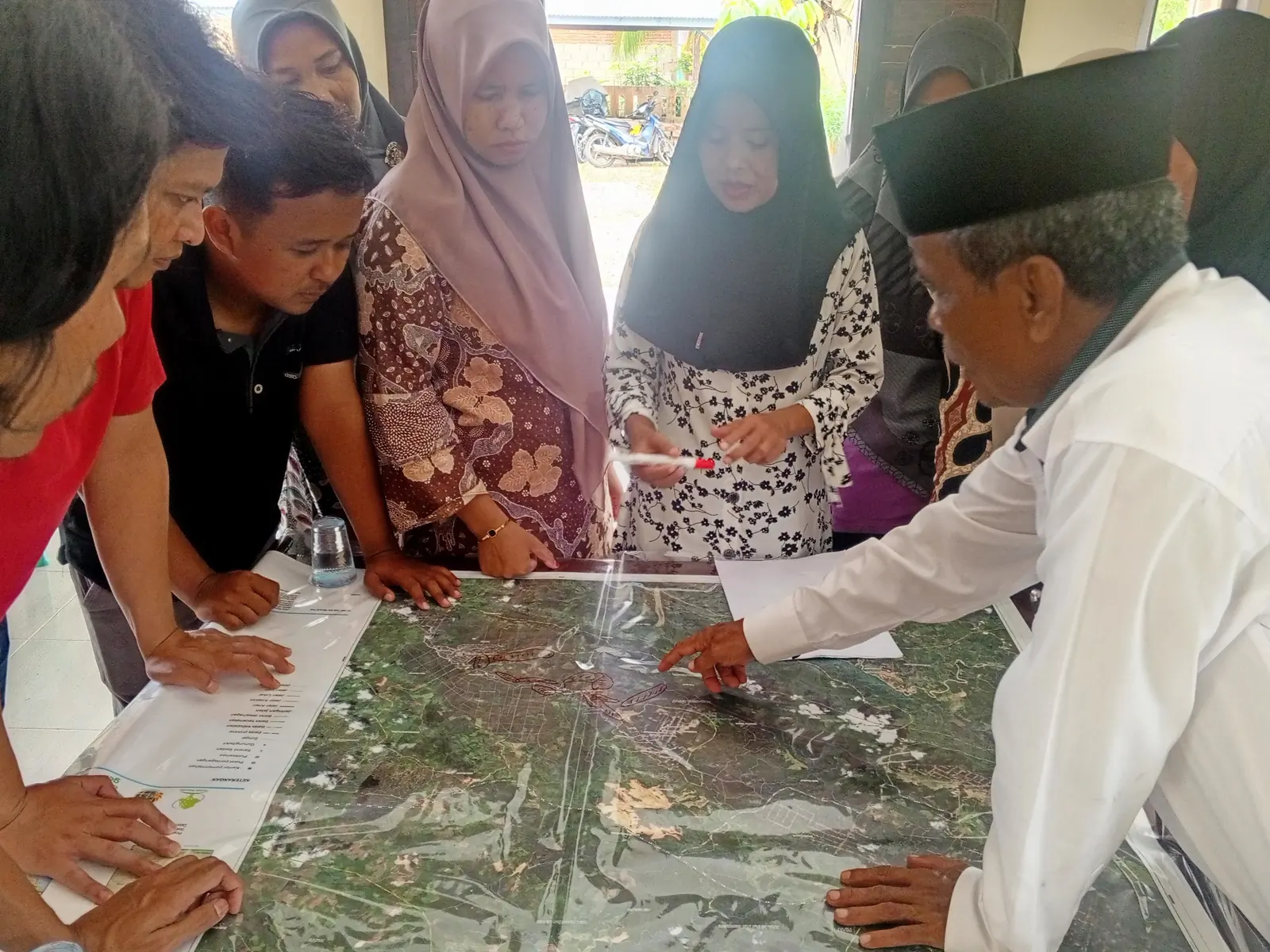
Yayasan Hutanriau is an independent Indonesian non-profit established in 2015. Based in Riau, it works on forest and land governance in Riau and, where projects require it, other parts of Sumatra. Its work includes participatory mapping, land-use planning, forest and land rehabilitation, ecological restoration, biodiversity surveys, livelihood development and the documentation of local knowledge.
WHO WE ARE
Built from work on public data, maps and land governance
Yayasan Hutanriau’s roots go back to work begun in 2013 to obtain and analyse public records on forest areas, permits and environmental assessments in Riau. The initiative was then known as Portal Hutanriau. It became an independent foundation in 2015.
That early spatial work still shapes the organisation. Teams combine maps and land-use data with field facilitation, ecological assessment, rehabilitation, restoration and work with organised community groups.
Yayasan Hutanriau is based in Riau. It has also delivered cross-provincial work in Riau and West Sumatra, including participatory land-use planning in Kuantan Singingi, Sijunjung and Dharmasraya.
Our Vision
Communities can prosper while forest functions are maintained and natural resources are governed fairly, with respect for the rights of Indigenous Peoples and local communities.
Our Mission
Yayasan Hutanriau works with community groups to manage forests and land, facilitates fair legal access, develops livelihoods linked to responsible natural resource use, brings local knowledge and field records into decision-making, and coordinates with institutions involved in land and forest governance.
Organisational Values
Field-based judgement
Plans are tested against the conditions recorded in each place, rather than assumptions carried from elsewhere.
Methods suited to the task
Teams use the methods each assignment requires, including mapping, facilitation, surveys, field measurements, rehabilitation, monitoring and review.
Accountable delivery
Yayasan Hutanriau makes realistic commitments, documents results and limitations, and reports what the available records can support.
COMMUNITY RIGHTS AND PARTNERSHIP
Working with communities and customary institutions
Projects involve people and institutions with different identities, rights and responsibilities. Yayasan Hutanriau uses terminology that reflects the specific setting rather than treating Indigenous Peoples, customary communities, local communities and organised community groups as interchangeable.
- Respect self-identification and customary institutions
- Use Free, Prior and Informed Consent when activities concern recognised rights, territories, knowledge or resources
- Identify the territorial and resource rights relevant to each project
- Agree how maps, traditional knowledge and local knowledge will be recorded, used and shared
- Explain project roles and decisions in accessible language
- Explain risks and benefit arrangements before activities begin
- Provide practical ways to raise questions, concerns and complaints
- Record who participates, including women and young people, without treating attendance as control over decisions
Governance and Accountability
Yayasan Hutanriau is governed as an Indonesian foundation. Its governing bodies oversee the organisation, while the executive team manages programmes, finance, administration and day-to-day operations.
- Foundation governance and oversight
- Executive management and internal decision-making
- Programme planning and management
- Financial management and administration
- Monitoring, evaluation and reporting
- Social and environmental safeguards
- Feedback and grievance handling
- Reporting to partners and donors
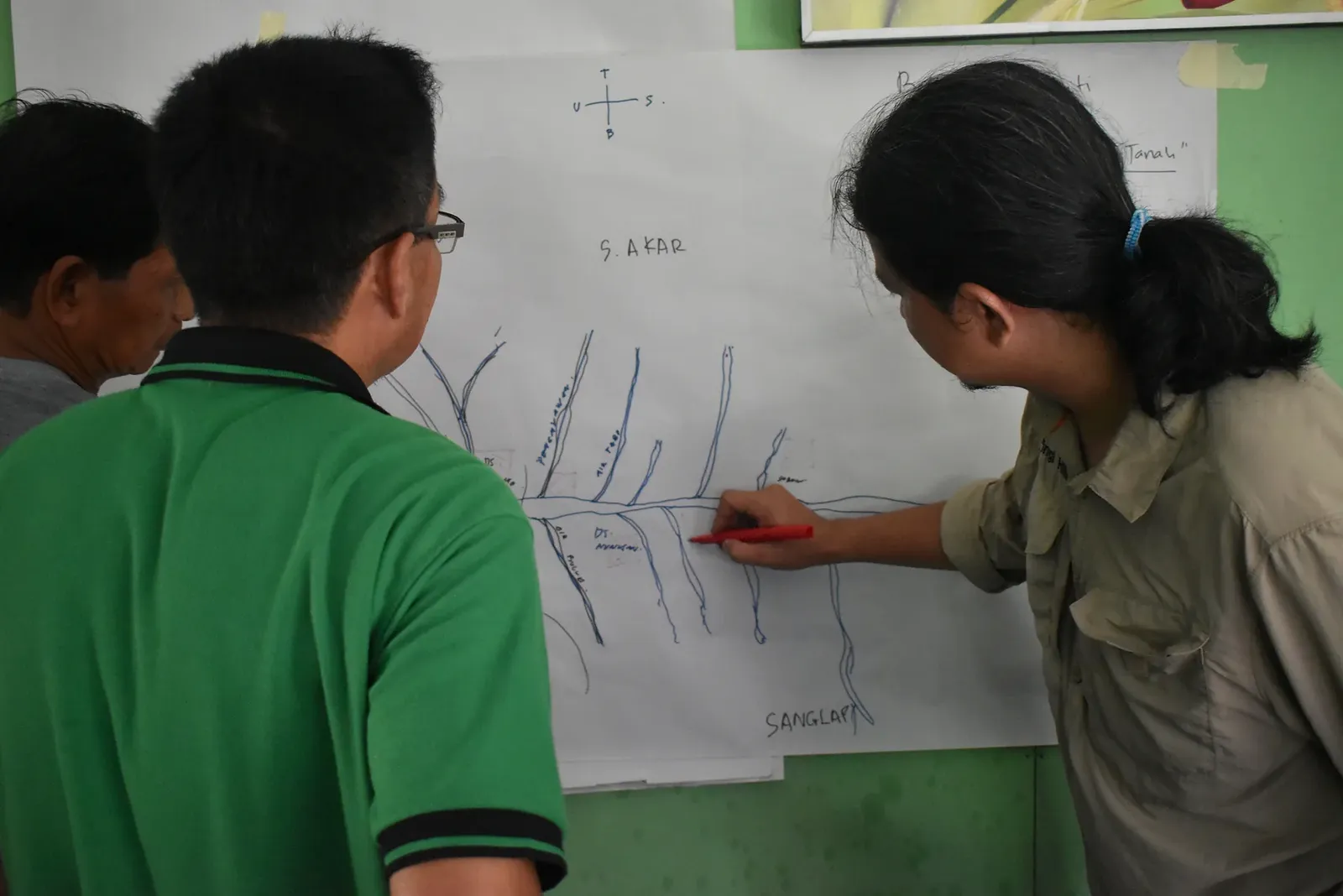
How We Work
Six principles guide project design and delivery. Their application depends on the people, institutions, rights and field conditions involved.
Rights and informed participation
Identify the people and institutions affected, clarify their roles and apply the appropriate consent and participation process.
Information from the field
Use maps, interviews, surveys, observations and monitoring records to define the problem and review progress.
Clear roles and records
Explain responsibilities, document decisions and report what was done, what changed and what remains uncertain.
Coordination and adjustment
Coordinate with the relevant institutions and revise activities when field conditions or project records show that a change is needed.
Safeguards and complaints
Assess risks early and provide accessible ways for people to raise concerns and receive a response.
Monitoring and learning
Track agreed indicators, review findings with the people involved and record lessons for later work.
Legal Status
Established:
23 February 2015
Legal form:
Foundation
Notarial Deed:
Anisa Ikhsan, S.H., M.Kn., Deed No. 05/2015
Ministry of Law and Human Rights Decree:
AHU-0003292.AH.01.04/2015
Our People & Governance
Hutanriau is guided by experienced practitioners and advisors working across community development, forestry, land governance, conservation, law, research and strategic communication. Our governance structure combines organisational oversight with practical knowledge of the landscapes and communities where we work.
Discuss a potential partnership
Yayasan Hutanriau welcomes enquiries from community organisations, public institutions, civil society organisations, universities, businesses and donors about field collaboration in Riau and other parts of Sumatra.