Beyond the Race: The Living Culture Behind Pacu Jalur
From village identity and oral traditions to timber, rivers and forests, Pacu Jalur lives through a cultural system that extends far beyond race day.
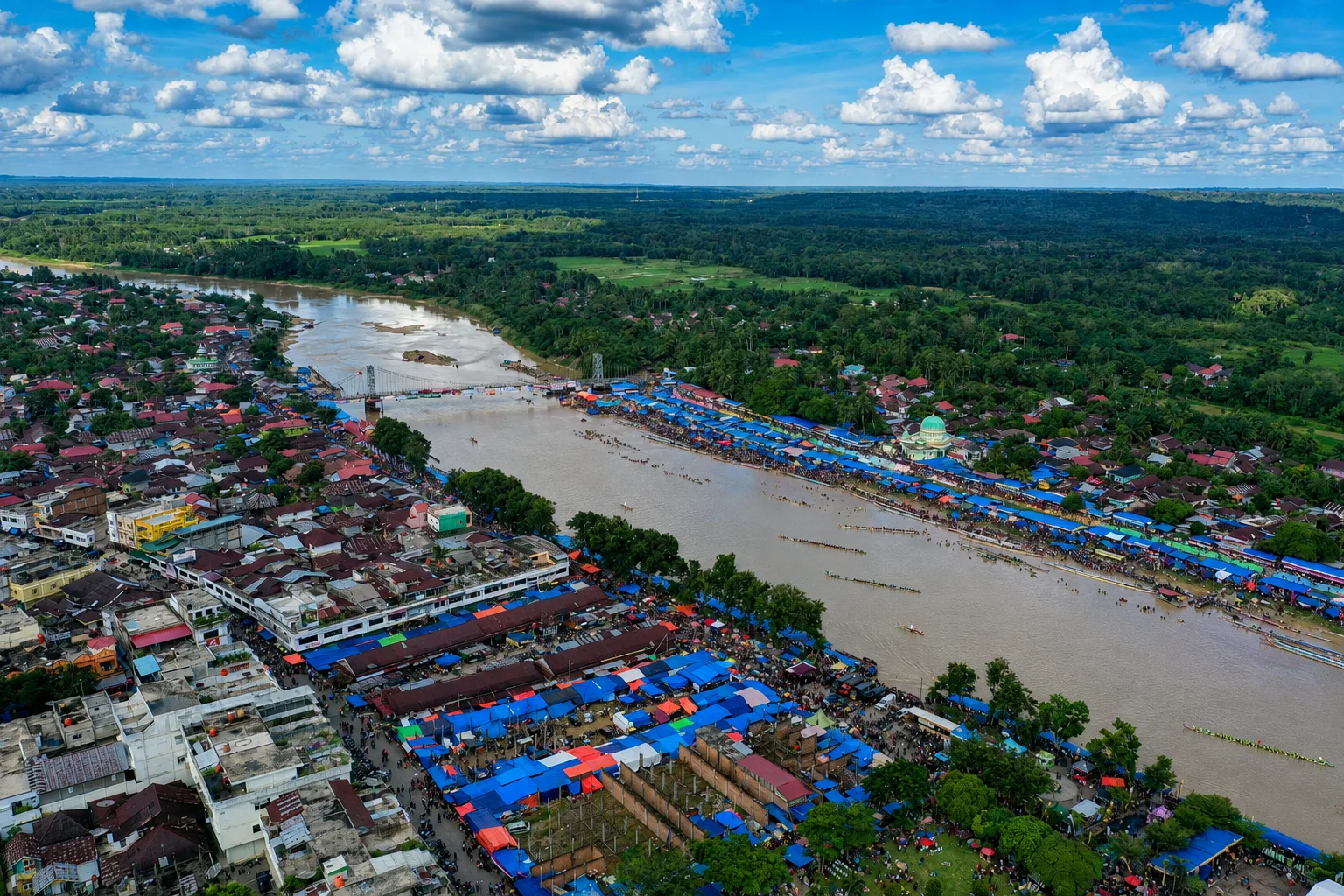
On 21 August 2026, Pacu Jalur was unfolding along the Kuantan River.
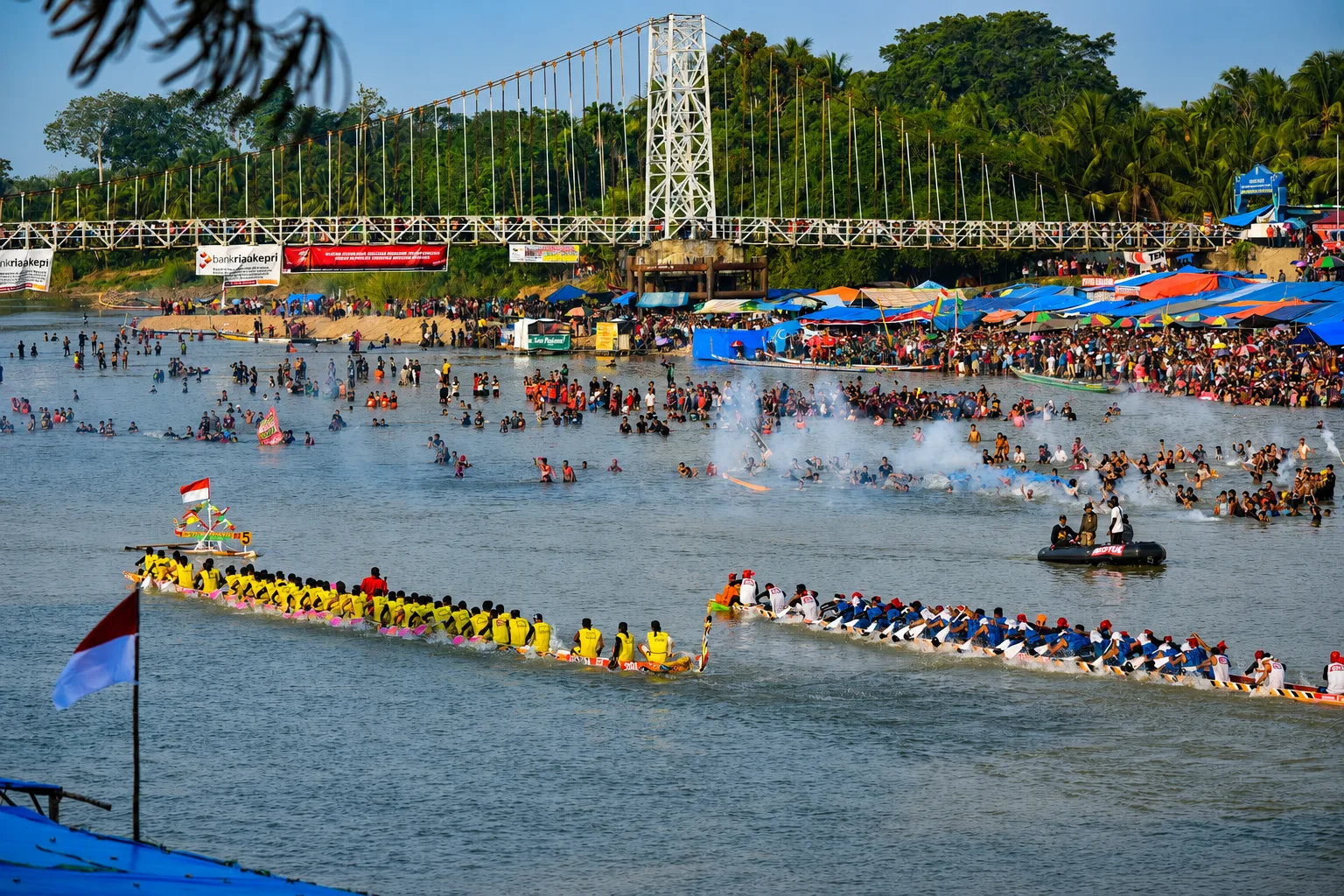
At Tepian Narosa, long wooden jalur raced through the brown water as thousands of people filled the riverbanks. Villages cheered for their crews. Temporary stalls crowded the waterfront. Boats, spectators, music and movement turned the river into a vast people’s celebration.
At the same time, a few kilometres away, a much smaller gathering was asking a different question.
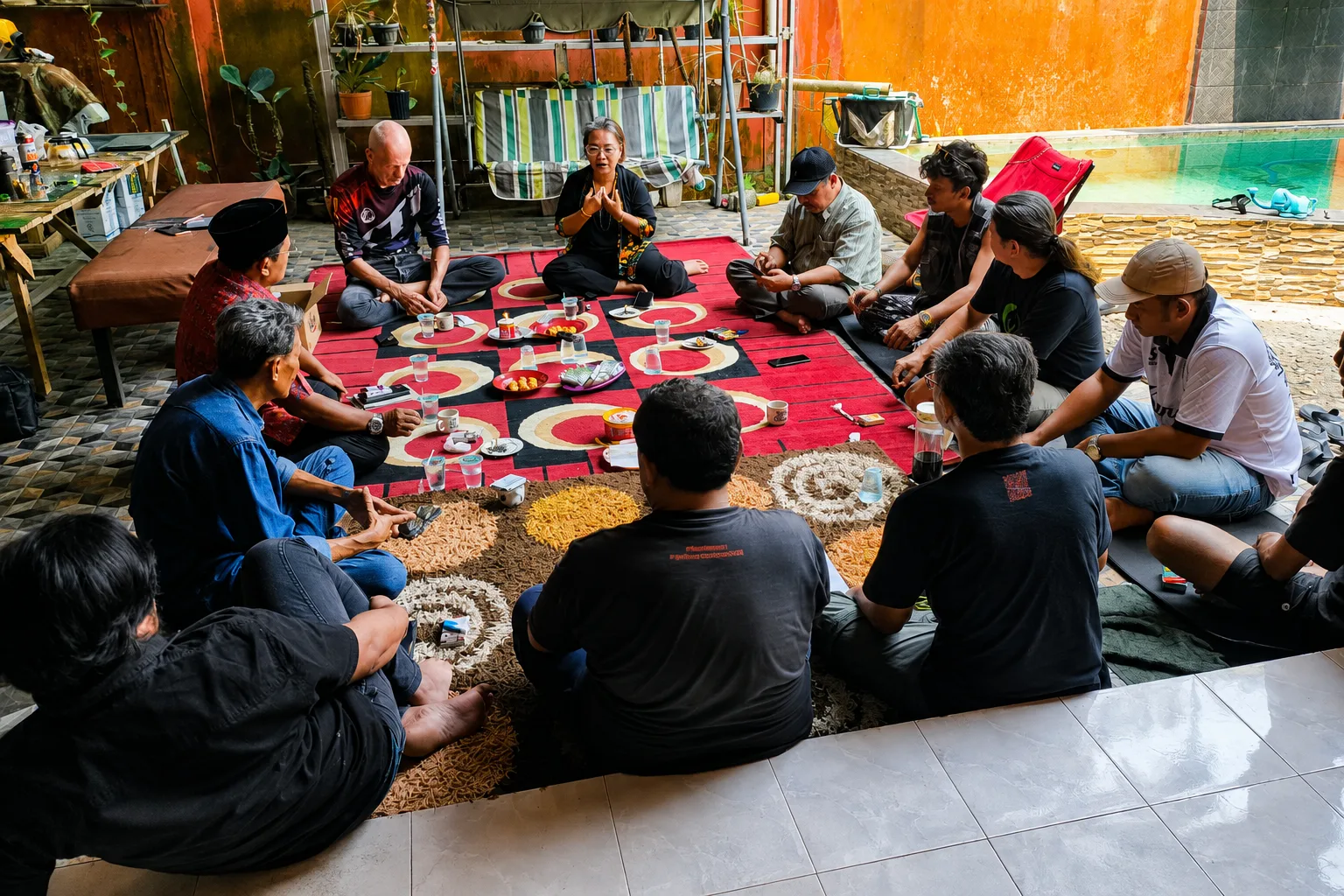
Inside ab_phituluiQ Home Studio in Kuantan Tengah, people sat in a loose circle on the floor over coffee and snacks. There was no conference table, no formal stage and no sequence of presentations.
Customary figures, cultural practitioners, researchers, environmental workers, people connected to tourism and visitors to Pacu Jalur were talking about what happens beyond the race.
The conversation began with a simple question in the language of Kuantan.
“Kan dibao kamano Pacu Jalur ko?”
Where are we taking Pacu Jalur?
Outside, Pacu Jalur was being celebrated in real time.
Inside, the conversation was about what must remain alive for that celebration to continue.
More Than a Race
For Dt. Paduko Rajo, the starting point was clear.
“Pacu itu bukan nomor satunya yang penting. Pestanya itu yang penting.”
The race is not the most important thing. The celebration is.
Dt. Paduko Rajo
Competition is an inseparable part of Pacu Jalur.
Villages prepare their crews. Supporters follow every round. A victory can become a source of pride remembered long after the event is over.
But the race is only one expression of something larger.
“Hakikatnya Pacu Jalur itu pesta rakyat.”
At its heart, Pacu Jalur is a people’s celebration.
The words matter because Pacu Jalur is changing.
Its visibility has grown. More visitors are coming. Sponsors are more prominent. Commercial activity around the festival has expanded. Images of the race now travel far beyond Kuantan Singingi through television and social media.
Growth itself is not the problem.
The question is what remains at the centre of the tradition as that growth happens.
A jalur still carries the identity of a village. Behind it are people who contribute time, money, labour and knowledge. Long before the crew reaches the starting line, decisions have been made, responsibilities divided and collective work undertaken.
Pacu Jalur is therefore not simply something people watch.
It is something communities make.
That distinction also shaped Sita Rohana’s view of the tradition.
“Tradisi itu tidak pernah berdiri sendiri. Tradisi selalu terkait dengan manusianya dan juga lingkungannya.”
Tradition never stands alone. It is always connected to its people and its environment.
What visitors see at Tepian Narosa is the most spectacular part of Pacu Jalur, but it is not the whole tradition.
Before race day there are village discussions, customary roles, craftsmanship, stories, oral traditions and relationships between generations. There are Rarak Godang and Randai Kuantan. There are people who remember how things were done and younger people who may, or may not, inherit that knowledge.
Sita described the jalur as carrying something much larger than the boat itself, almost like a basket filled with traditions.
“Kita melihat Pacu Jalur pada eventnya, pada festivalnya, pada pacunya, tetapi kita melupakan orang kampung yang menyokongnya.”
We see Pacu Jalur through the event, the festival and the race, but we forget the villages that sustain it.
To understand Pacu Jalur only from the river, then, is to arrive near the end of the story.
The story of a jalur begins much earlier.
What It Takes to Bring a Jalur to the River
A jalur is easy to recognise once it is racing.
It is long, narrow and filled with paddlers moving almost as one. A village name or identity travels with it. Spectators know which jalur they support.
But before it becomes a racing boat, a jalur is the result of a long chain of relationships.
Someone must know what kind of tree can become a jalur.
Someone must know where such a tree can be found.
People must decide together whether it is suitable. The timber must be worked by people who understand its character. The boat must eventually be brought from land to water and transformed into something that represents a community.
Seen this way, a jalur is not simply a wooden object.
It is where material, knowledge, collective work and identity meet.
This is also where the conversation inside the home studio began moving from culture toward ecology.
Sita put it plainly:
“Kita juga melupakan bagaimana lingkungan menyediakan bahan untuk jalurnya.”
We also forget how the environment provides the material for the jalur.
The timber has to come from somewhere.
And before it became timber, it was a living tree.
“Tidak ada Pacu Jalur tanpa jalur. Tidak ada jalur tanpa kayu. Dan tidak ada kayu tanpa hutan.”
There is no Pacu Jalur without a jalur. There is no jalur without timber. And there is no timber without forest.
Melki Rumania, Yayasan Hutanriau
This is not an argument for placing tradition on one side and forest conservation on the other.
It is almost the opposite.
The forest is part of what makes the tradition possible.
Before a Jalur Races, It Grows for Decades in the Forest
A race may last only minutes.
The tree needed to make a jalur may have spent decades growing before anyone selected it.
“Sebelum sebuah jalur berpacu di sungai, ia terlebih dahulu tumbuh puluhan tahun di hutan.”
Before a jalur races on the river, it first grows for decades in the forest.
Melki Rumania
That simple difference in time changes the way the future of Pacu Jalur can be understood.
Pacu Jalur returns every year.
A large tree does not.
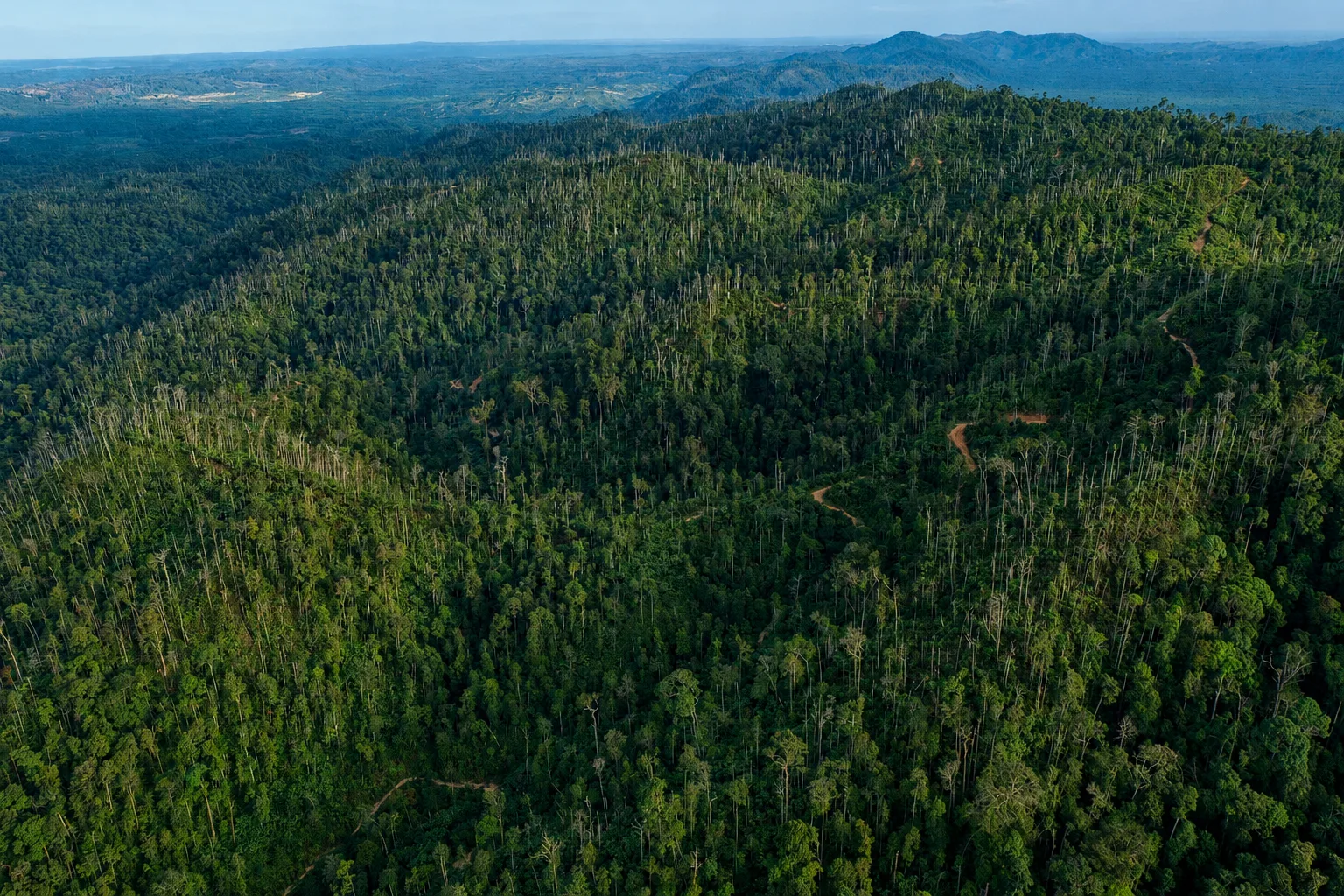
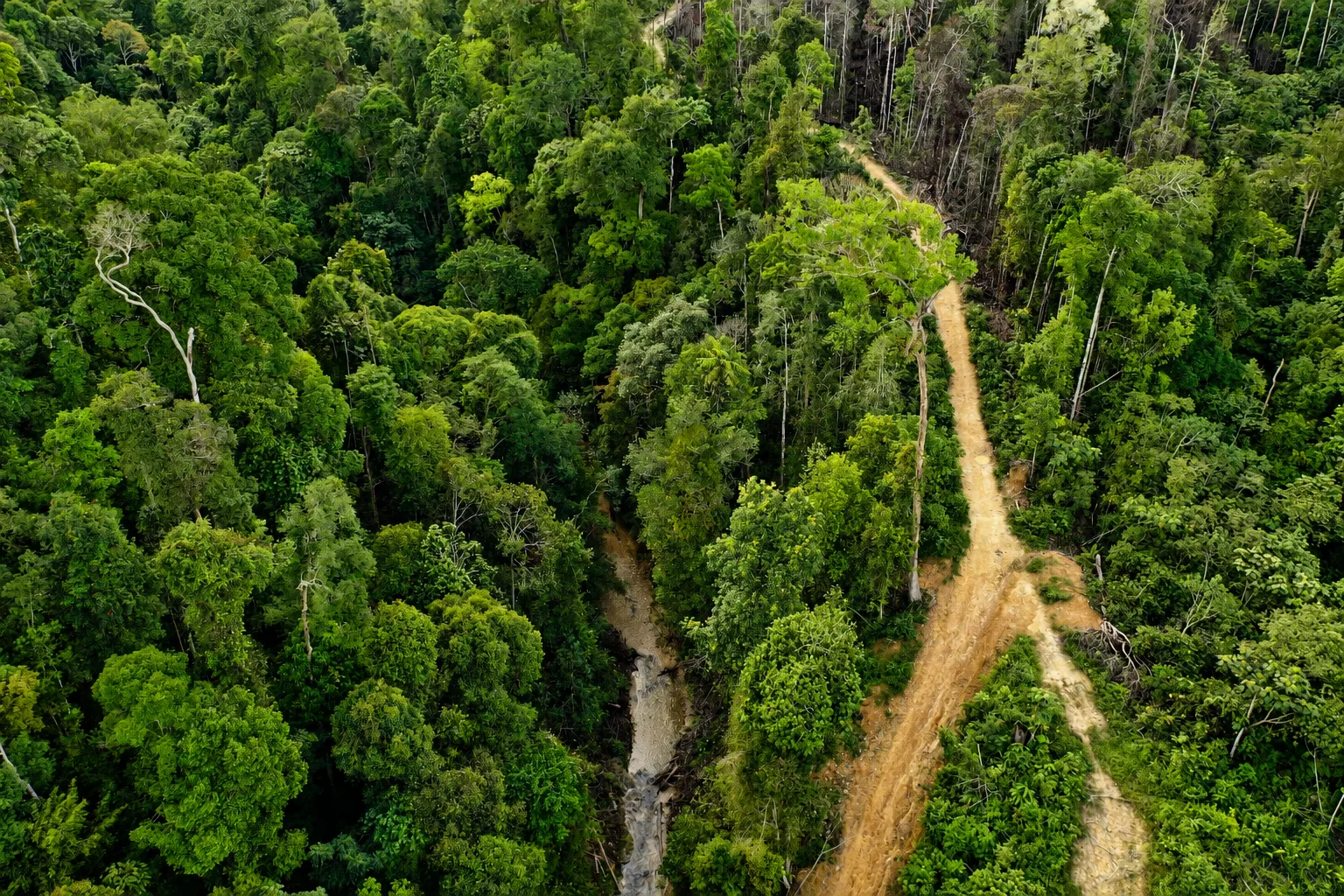
One of the forest landscapes connected to that future is Bukit Batabuh Protected Forest, one of the largest source areas for timber used to make jalur in Kuantan Singingi.
From above, much of Bukit Batabuh is still covered by forest. Ridges extend across the landscape. Streams run through the vegetation. In some places, roads and openings interrupt the canopy.
The landscape is not just scenery behind the cultural story.
It is part of the story.
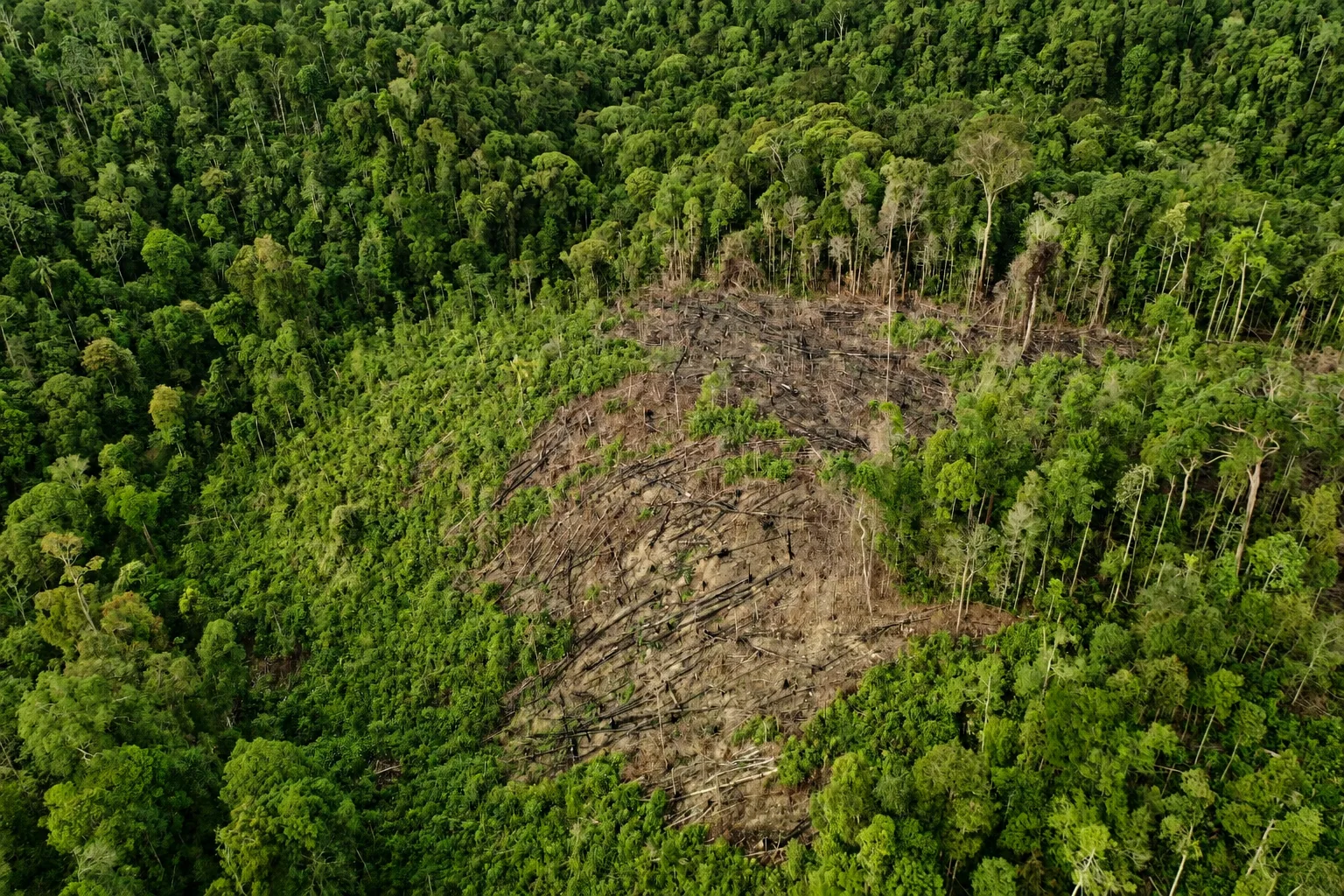
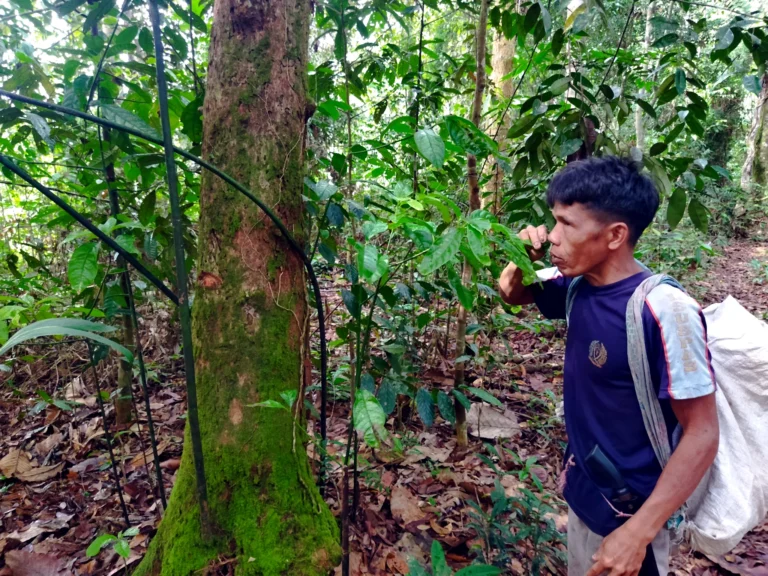
Somewhere in forests such as Bukit Batabuh are trees that may become future jalur. Around those trees is also knowledge: how they are recognised, why certain species are preferred, when a tree is considered suitable, where it can be found and how it should be treated.
If suitable trees become harder to find, something more than a source of timber is at risk.
The practice surrounding that timber can become harder to pass on as well.
This raises questions that cannot be answered by preparing next year’s race alone.
Which tree species have traditionally been used?
Where do suitable trees still remain?
How long do they need to grow?
How many potential future jalur trees are regenerating now?
Could communities begin identifying and protecting trees that may be needed decades from today?
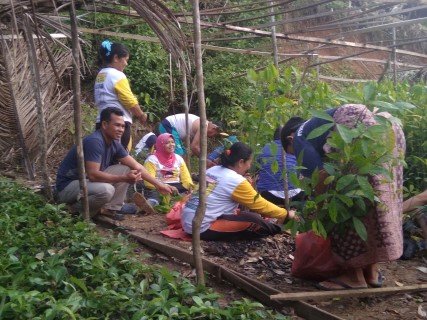
Could planting and caring for future jalur trees eventually become part of the cultural cycle itself?
“Kita bisa menghitung berapa jalur yang dibuat setiap tahun. Tetapi apakah kita sudah tahu berapa pohon calon jalur yang sedang kita siapkan untuk dua puluh atau tiga puluh tahun mendatang?”
There is no complete answer yet.
But asking the question changes the timescale.
It asks people to think not only about the next festival, but about the people who will inherit Pacu Jalur twenty or thirty years from now.
A Tradition Lives Only If It Is Passed On
The same question of time appears in another part of Pacu Jalur.
Knowledge.
For Afrizal Alang, this may be one of the most urgent issues surrounding the tradition.
“Persoalannya adalah pewarisan.”
The issue is transmission.
A great deal of cultural knowledge does not sit inside official documents.
It lives with people.
It survives in stories, petatah-petitih, pantun, advice, memory and performance. It is carried by customary leaders, craftspeople, performers and elders who know not only what is done, but why it is done.
When that knowledge is not passed on, its disappearance can be quiet.
There may be no dramatic moment when a tradition is declared lost.
One person simply stops performing it.
Another person who knew a story dies.
A younger generation grows up seeing the race but never learning what happened before the jalur reached the river.
Documentation matters, but recording a tradition is not the same as keeping it alive.
A video can preserve a Randai performance. It cannot create another generation of performers.
A written record can describe Rarak Godang. It cannot replace the experience of hearing it played within the cultural life of the community.
A photograph can preserve the image of a jalur. It cannot teach someone how earlier generations recognised the tree from which it could be made.
Pacu Jalur survives as a living culture only when people continue to practise, reinterpret and transmit the knowledge around it.
Afrizal captured the risk in a sentence that cut through the discussion.
“Tradisi dan menang tidak apa-apa. Yang susah itu tradisinya hilang, menangnya terus.”
Tradition and winning can go together. The problem is when the tradition disappears and only winning remains.
Afrizal Alang
A race can survive while parts of the culture around it disappear.
That is precisely why cultural continuity needs more than an annual event.
Culture, Visitors and the River
Pacu Jalur is now being seen by more people than ever.
That creates opportunities.
Visitors bring economic activity. Wider attention can strengthen recognition of the tradition. Tourism can create new reasons for people to value what is distinctive about Kuantan Singingi.
But the discussion also raised a caution.
For Sita, culture should not be redesigned simply to satisfy assumptions about what visitors want.
“Kita mesti memperkuat budayanya. Pariwisata akan datang dengan sendirinya.”
We need to strengthen the culture. Tourism will follow.
Visitors come because Pacu Jalur is particular to this place.
“Bukan kita yang menyesuaikan dengan kemauan pasar. Wisatawan datang karena ingin melihat kekhasan kita.”
Marc Thalmann approached the issue from the tourism side.
“Pariwisata hanya satu pilar dari sebuah ekosistem.”
Tourism is only one pillar of an ecosystem.
A visitor experiences more than the race.
They encounter roads, public spaces, toilets, accommodation, food, hospitality and the condition of the riverfront. They also encounter villages, people and landscapes.
For Marc, cultural strength begins with strong roots.
“Kalau pohon tidak punya akar yang kuat, dia gampang tumbang.”
If a tree does not have strong roots, it falls easily.
The metaphor fits Pacu Jalur unusually well.
Visibility can grow quickly.
Roots take generations.
One visitor in the discussion, content creator Gifari Antoni, had travelled to Kuantan Singingi wanting to understand more than the images of Pacu Jalur that circulate online.
“Membuat sesuatu yang viral itu gampang. Membuat sesuatu yang melekat, diingat, dan punya isi, itu yang sulit.”
While documenting the festival, however, his camera also captured another reality.
Waste floating in the river.
“Mereka berpacu, tetapi di tengah-tengahnya ada sampah yang hanyut.”
They were racing, but rubbish was floating between them.
The image is difficult to separate from the larger cultural question.
The Kuantan River is not merely a venue.
It is where Pacu Jalur lives.
Caring for the river is therefore not only a matter of cleaning up after an event. It is also part of caring for the place that gives the tradition meaning.
Thinking Beyond Next Year’s Race
While the discussion was taking place, the jalur were still racing at Tepian Narosa.
Crowds were still cheering from the riverbank.
The celebration was happening in real time.
Inside the home studio, however, the conversation had moved decades ahead.
No master plan emerged that morning.
But a set of questions did.
How can customary knowledge be passed on while the people who hold it are still here?
How can younger generations experience Pacu Jalur as more than a race?
How can Rarak Godang, Randai and other cultural expressions remain part of living community life?
How can communities continue benefiting from a celebration that is becoming larger and more commercial?
How can the Kuantan River be treated with the dignity of a place that carries one of Riau’s most recognisable traditions?
And if timber remains essential to the jalur, who is preparing the trees that the next generation will need?
“Jangan hanya menyiapkan jalur untuk pacu tahun depan. Mulailah menyiapkan pohon untuk Pacu Jalur generasi berikutnya.”
Do not only prepare a jalur for next year’s race. Start preparing the trees for the next generation of Pacu Jalur.
Melki Rumania
That idea reaches beyond forestry.
It is a way of thinking about inheritance.
Some things must be prepared long before the people who will use them are ready.
A child may inherit a story from an elder.
A young performer may inherit a song.
A village may inherit a jalur.
And one generation may plant or protect a tree knowing that it will belong to another.
A jalur races for minutes.
A tree grows for decades.
A tradition is carried across generations.
“Kan dibao kamano Pacu Jalur ko?”
Where are we taking Pacu Jalur?
Perhaps the answer depends not only on what happens at Tepian Narosa next year.
It also depends on what people choose to keep alive in the villages, what knowledge they continue to pass on, how they care for the river, and what they allow to keep growing in the forest long before the next jalur reaches the water.