
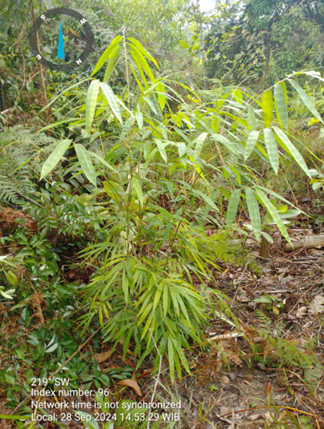
bamboo planted during the 2024 phase
Ecosystem Restoration and Climate Adaptation
Bamboo Planting and Habitat Enrichment in Tahura SSH
Hutanriau planted 1,000 bamboo stems across 10 ha in Tahura Sultan Syarif Hasyim, recorded 76% survival in an initial census, and added 150 forest-fruit plants to a one-hectare collection block.
Project overview
Project Overview
In 2024, Hutanriau planted bamboo and forest-fruit species in Tahura Sultan Syarif Hasyim as part of habitat-enrichment work supported through PLN's social and environmental responsibility programme. The project established 1,000 bamboo stems across 10 ha, maintained earlier bamboo planting, and added 150 forest-fruit plants to a one-hectare collection block.
Project snapshot
At a glance
covered by the new bamboo planting
recorded in the initial September 2024 census
forest-fruit trees added to a one-hectare collection block
Why this work mattered
Project Context
Tahura Sultan Syarif Hasyim contains degraded areas where restoration and habitat enrichment require long-term maintenance. The 2024 phase combined bamboo planting, maintenance of earlier planting areas, early survival monitoring, and enrichment of a forest-fruit collection block. The intervention was designed to contribute to habitat recovery and future elephant forage within a wider landscape approach.
What we set out to do
Objectives
• Establish bamboo planting across 10 hectares in Tahura Sultan Syarif Hasyim.
• Maintain and replant earlier bamboo areas where required.
• Enrich a forest-fruit collection block with locally relevant species.
• Produce an early survival baseline for continued monitoring.
• Strengthen supporting skills for local micro and small enterprises.
Delivery
What Hutanriau Did
• Prepared planting sites and transported planting materials.
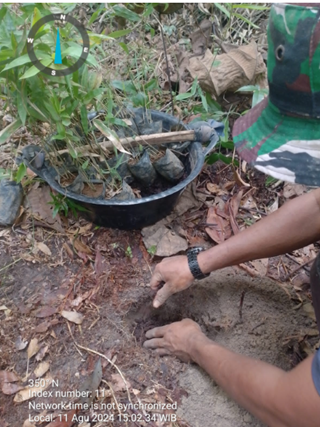
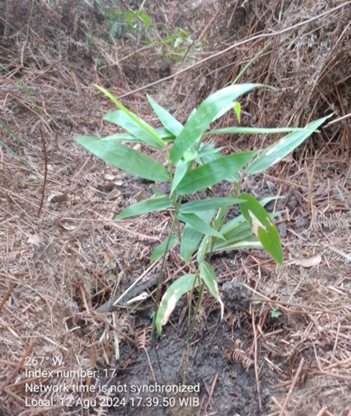
• Planted 1,000 bamboo stems across 10 hectares.
• Managed reserve stock, fertilisation, maintenance, and replanting.
• Conducted an initial bamboo survival census.
• Added 150 forest-fruit plants to a one-hectare collection block.
• Delivered social media training for micro and small enterprises.
What changed and what we learned
Results and Learning
The September 2024 census recorded 76 per cent survival in the new bamboo planting, providing an early baseline for continued maintenance and monitoring. Reserve stock, fertilisation, weeding and replanting were built into delivery because establishment depends on care beyond the planting event.
The bamboo and forest-fruit planting were intended to enrich habitat and contribute future forage for elephants. The project did not establish that habitat condition improved over the long term or that human-elephant conflict declined.
Project album
Field Documentation
Selected photographs documenting project activities, field implementation, and community participation.
Work with us
Planning locally grounded environmental work in Riau?
Hutanriau collaborates with communities, donors, government agencies, research institutions, civil society organisations, and responsible private-sector partners.