
planting and maintenance area

Ecosystem Restoration and Climate Adaptation
Tree Planting and Maintenance in Tahura Sultan Syarif Hasyim
A two-phase programme combining tree planting, monitoring, maintenance and replacement planting across three hectares of Tahura Sultan Syarif Hasyim.
Project overview
Project Overview
Hutanriau implemented a tree planting and maintenance programme in Tahura Sultan Syarif Hasyim through the InJourney Airports Alam Lestari Programme, with support from PT Angkasa Pura Indonesia and coordination with UPT KPHP Minas Tahura.
The work combined planting with follow-up monitoring, maintenance and replacement planting. This approach recognised that establishing young trees in a conservation landscape requires continued field attention, particularly where dry conditions, fast-growing understorey vegetation, difficult access and wildlife movement affect implementation.
Project snapshot
At a glance
seedlings planted cumulatively across the programme
Includes the main planting and staged infill or replacement planting.
survival recorded in the final project census
The final project census recorded an 80% survival rate.
Documented Outputs
- Main planting completed across the three-hectare project area.
- An initial seedling census completed across two operational blocks.
- Maintenance and replacement planting completed within the project area.
- Field records, photographs, mapping and implementation documentation compiled.
Why this work mattered
Project Context
Tahura Sultan Syarif Hasyim is a conservation area in Riau managed by UPT KPHP Minas Tahura. The project site combines established vegetation, more open or degraded areas, rapidly growing understorey vegetation and limited field access. It also lies within a landscape used by Sumatran elephants, making wildlife movement an important consideration for field safety and operations.
The project formed part of the InJourney Airports Alam Lestari Programme supported by PT Angkasa Pura Indonesia. Meranti balangeran, a swamp-forest tree, and tampui, a local fruit tree, were selected for the planting programme.
Rather than treating tree planting as a single event, the project linked establishment with monitoring and follow-up maintenance. This allowed field observations to guide practical responses to seedling mortality, vegetation competition and changing site conditions during the implementation period.
What we set out to do
Objectives
- Support vegetation recovery within a three-hectare area of Tahura Sultan Syarif Hasyim through tree planting and maintenance.
- Establish meranti balangeran and tampui seedlings and maintain access to planting points for follow-up monitoring.
- Use monitoring, maintenance and replacement planting to respond to early seedling mortality and changing field conditions.
- Build practical learning and collaboration around restoration work within a conservation landscape.
Delivery
What Hutanriau Did
- Coordinated technical planning, site preparation and field implementation with UPT KPHP Minas Tahura and PT Angkasa Pura Indonesia.
- Procured and managed the project seedlings, prepared planting lines and points, and organised field distribution and planting.
- Conducted an initial seedling census across the two operational blocks and used the findings to guide subsequent field work.
- Reopened planting lines, managed competing understorey vegetation, inspected planting points and carried out replacement planting where required.
- Documented field conditions throughout implementation and adjusted work schedules in response to access constraints and Sumatran elephant activity.
What changed and what we learned
Results and Learning
Monitoring informed practical follow-up
The first seedling census provided a structured picture of plant condition after the main planting phase. The results helped direct later field checks, maintenance and replacement planting rather than leaving monitoring as a reporting exercise.
Planting lines needed to remain traceable
Fast-growing understorey vegetation closed parts of the planting routes during the establishment period. Reopening the lines made it possible to locate seedlings again, assess their condition and carry out targeted maintenance around planting points.
Restoration work had to adapt to wildlife movement
The project area lies within a landscape used by Sumatran elephants. Elephant activity damaged the temporary field shelter and project sign and also affected decisions about when field teams could safely enter the site. Hutanriau adjusted field schedules in coordination with the area manager rather than attempting to restrict wildlife movement.
Planting was only the beginning of the work
The programme reinforced a practical lesson from field restoration: planting, monitoring, maintenance and replacement planting need to be treated as a connected sequence. Field activities continued beyond the initial planting phase and concluded with maintenance and replacement work in early June 2026.
Project album
Field Documentation
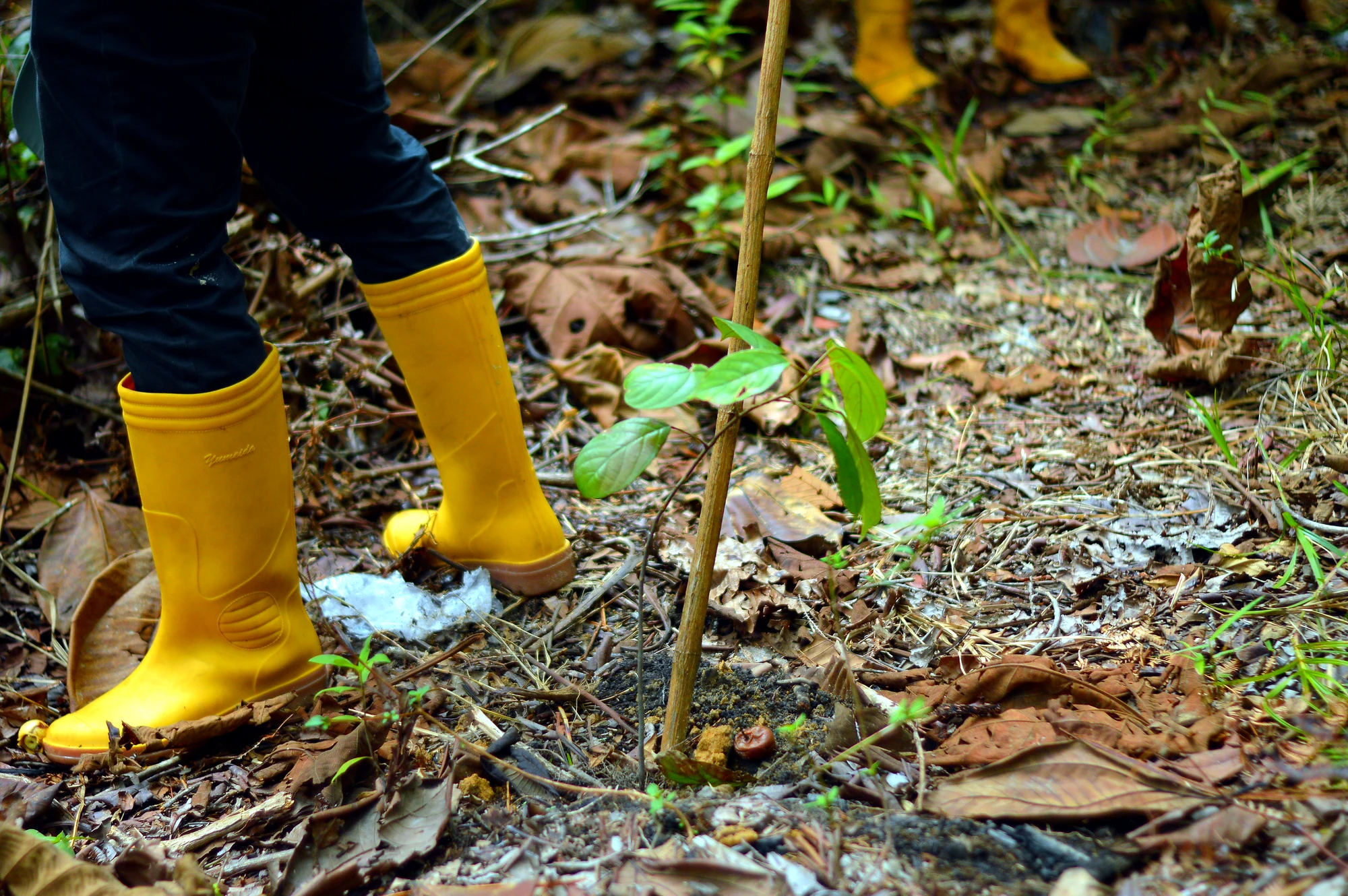
Selected photographs documenting project activities, field implementation, and community participation.


Work with us
Planning locally grounded environmental work in Riau?
Hutanriau collaborates with communities, donors, government agencies, research institutions, civil society organisations, and responsible private-sector partners.