Following the Trail of Dragon’s Blood
A field journey into Bukit Batabuh, where community forest management and jernang-based livelihoods meet.
By the time the route reaches the Putat River, the journey changes pace. The road gives way to water, stones and the dense vegetation of Bukit Batabuh. In March 2018, participants in the field journey known locally as Jejak Si Darah Naga, or Dragon’s Blood Tracks Exploration, followed this route towards the Bukik Ijau management area. Some had travelled from Air Buluh and nearby communities, while others joined from forest-management institutions, civil-society organisations and neighbouring areas.
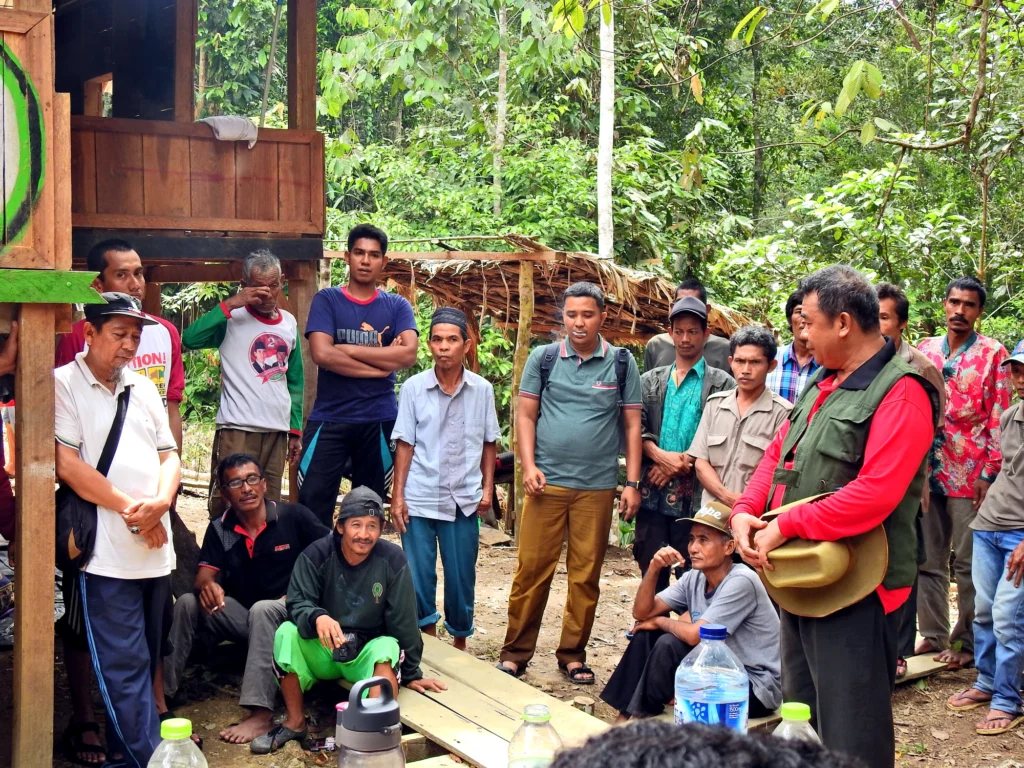
The destination was not simply a harvesting site. It was a place where community members were maintaining jernang, discussing forest management and testing how forest-based livelihoods might support a continued presence in the landscape. The exploration, held from 15 to 17 March 2018, brought together approximately 60 participants for a practical exchange rooted in the conditions of the forest itself.
The Forest and Dragon’s Blood
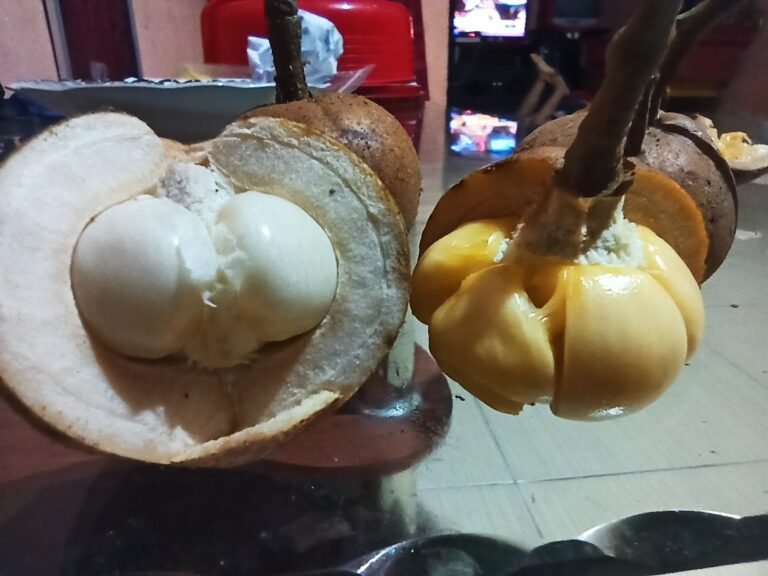
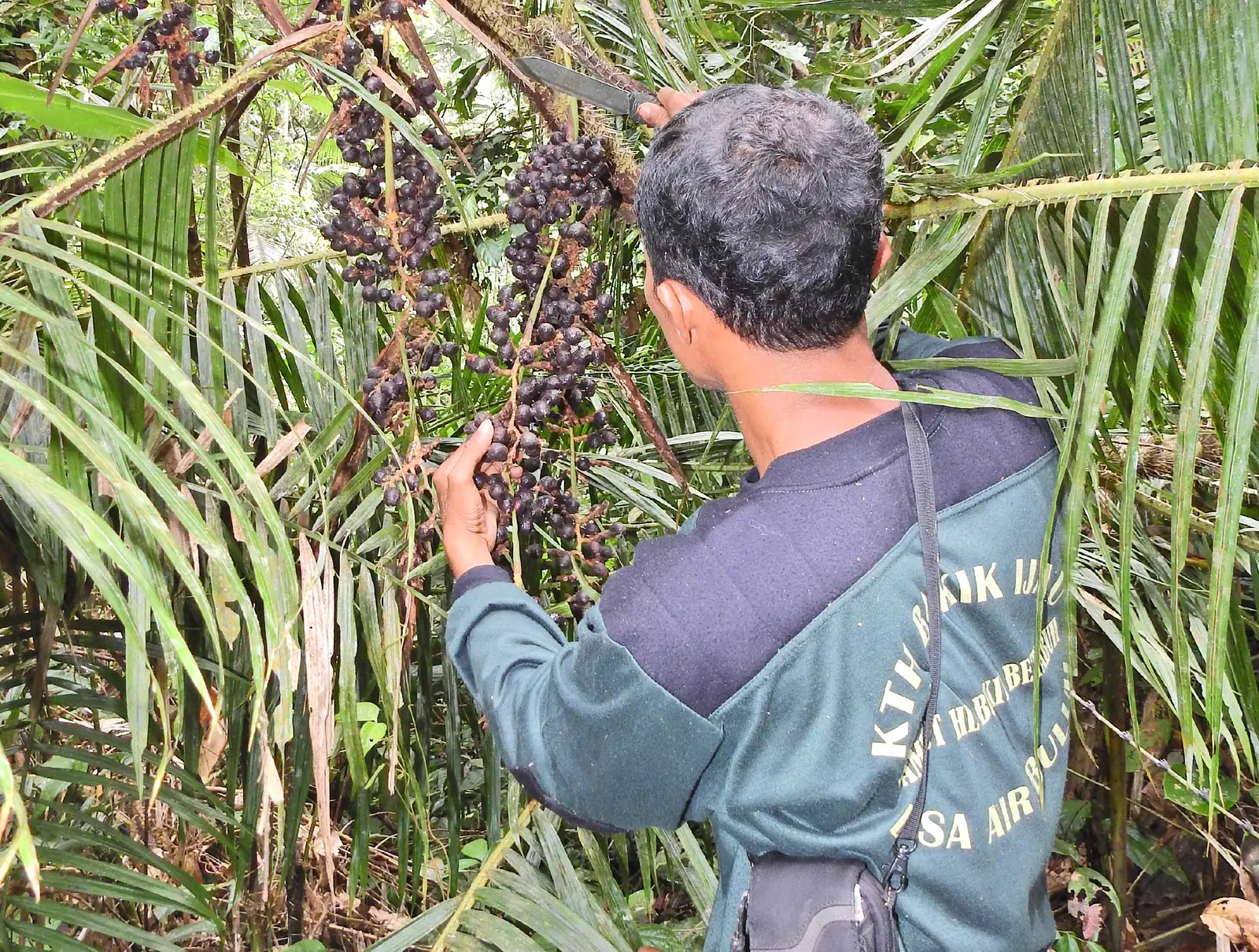
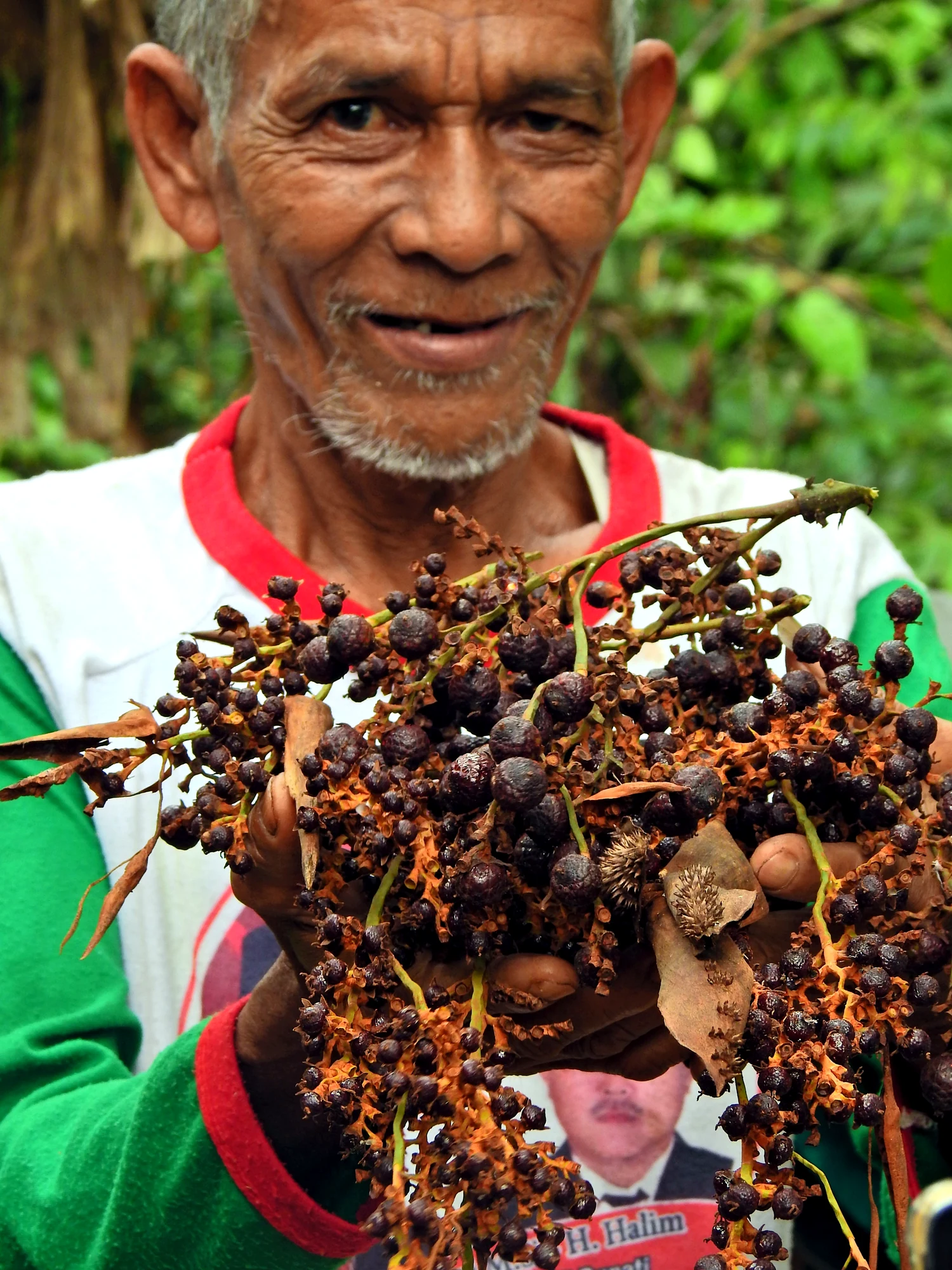
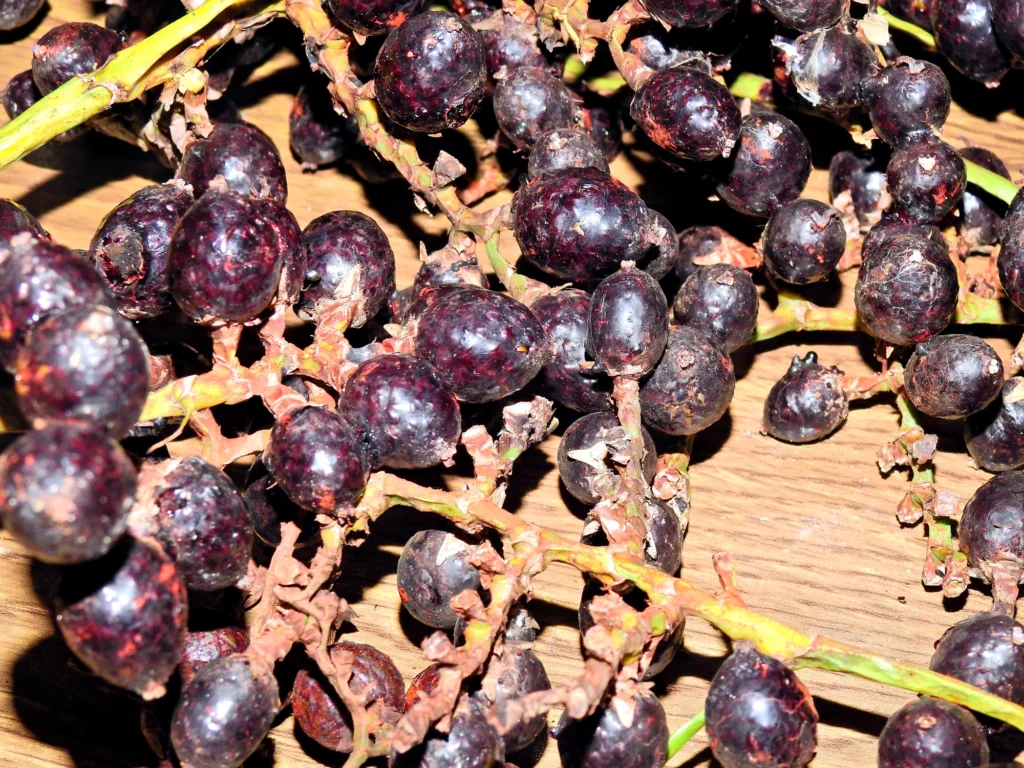
Air Buluh Village lies beside the Bukit Batabuh forest landscape in Kuantan Singingi, Riau. For generations, the forest has been part of local livelihoods, knowledge and daily life. Among the non-timber products associated with this relationship is jernang, a climbing rattan commonly known internationally as Dragon’s Blood. Its fruit yields a red resin used in a range of products and traded beyond the village.
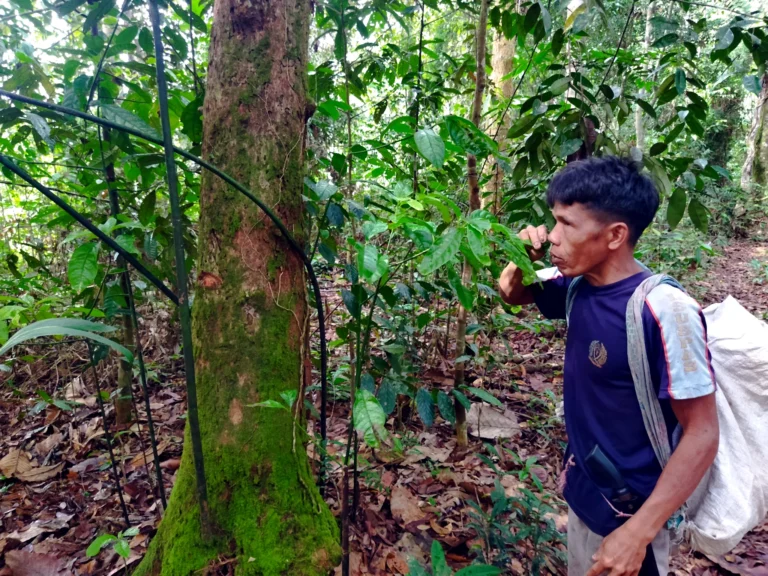
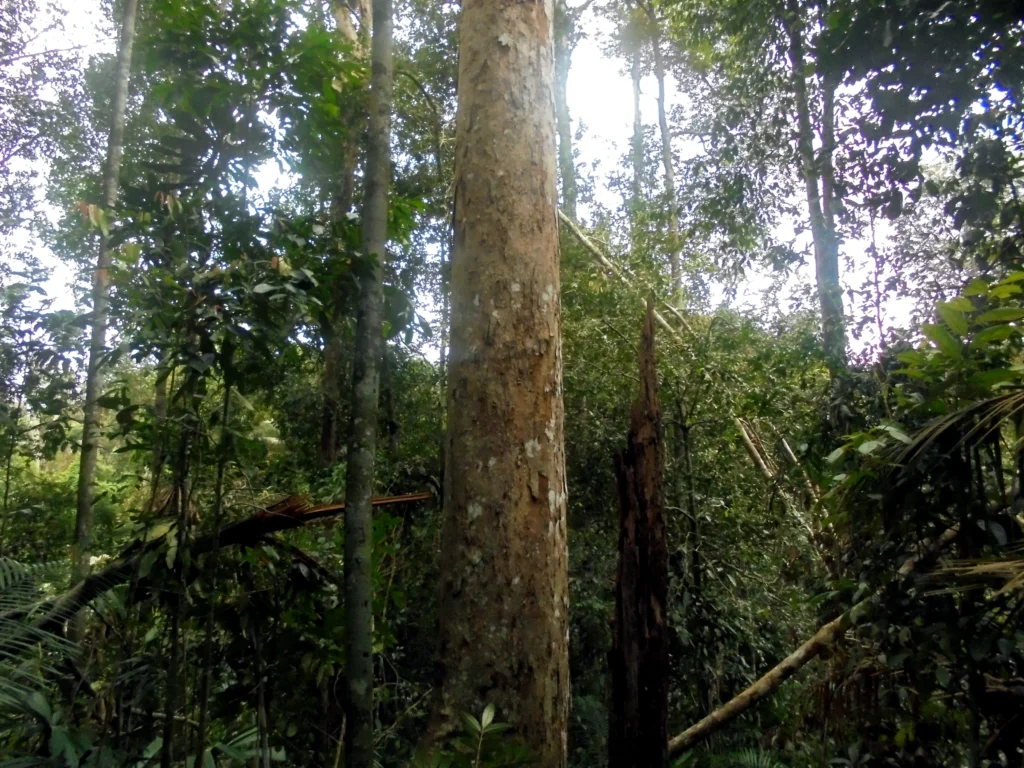
Jernang is significant not only because it has value as a forest product. It grows with, and depends on, standing forest vegetation. The vines use surrounding trees and other vegetation for support. In Bukit Batabuh, this makes its management inseparable from the condition of the forest around it. A harvest therefore opens a wider conversation: about cultivation, access, group responsibilities, security and the practical work needed to remain present in the forest.
Long before the RRI-supported initiative began in October 2017, people in Air Buluh were already drawing on forest knowledge and developing jernang practices. Hutanriau’s role was to work from those existing efforts, helping communities connect local practice with mapping, group organisation, non-timber forest product management and engagement with the institutions responsible for forest management.
Following the Trail
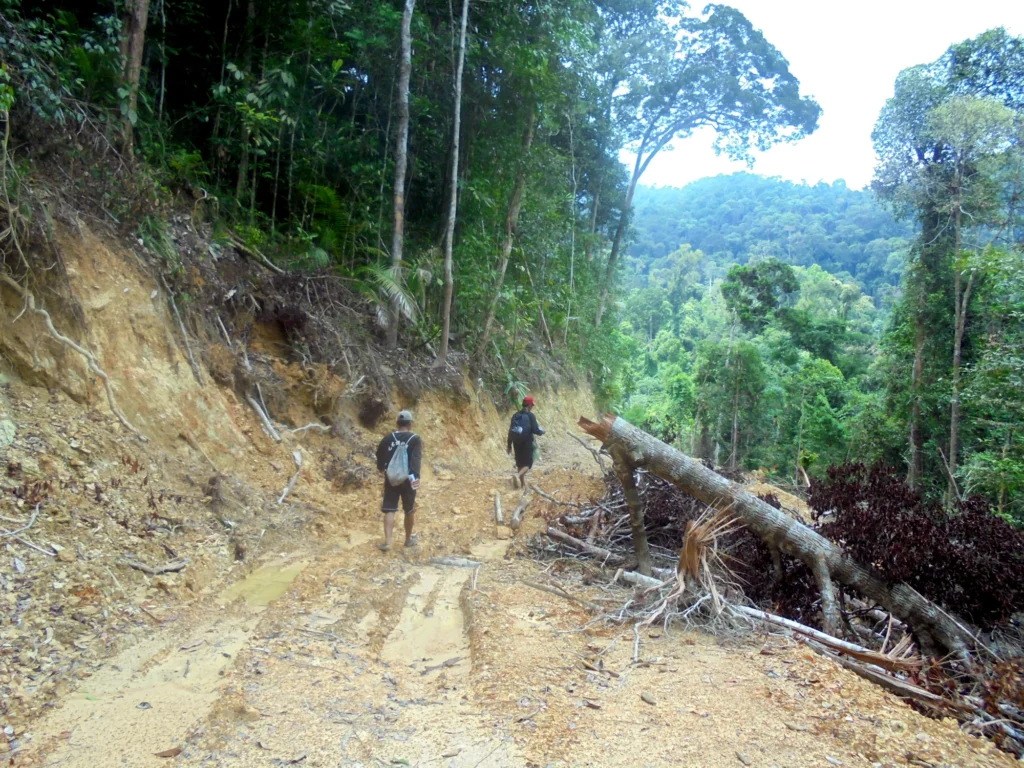
The journey to the Bukik Ijau field post made the realities of this work tangible. Participants travelled by motorcycle before continuing on foot along the river route. The walk took more than two hours under normal conditions. Water levels could make the route slower and more difficult, particularly in the rainy season. Reaching the management area required time, equipment and familiarity with the terrain.
That access challenge shaped the discussion as much as the destination did. Distance affects how often a group can visit a site, carry supplies, observe the condition of jernang and respond to risks. It also affects patrols. Bukik Ijau maintained a regular forest presence, with patrols reported at around three to four days each week, but difficult access could limit coverage. The field journey made clear that stewardship is not an abstract idea. It involves the repeated, physical effort of returning to the forest.
At the field post, the landscape provided the setting for a wider exchange. Participants discussed social forestry, community forest management and the possibilities of forest-based enterprises. The discussion did not treat jernang as a stand-alone commodity. Other non-timber forest products, including gaharu and pinang, were also considered as part of a broader set of livelihood options rooted in local conditions.
Learning from Practice
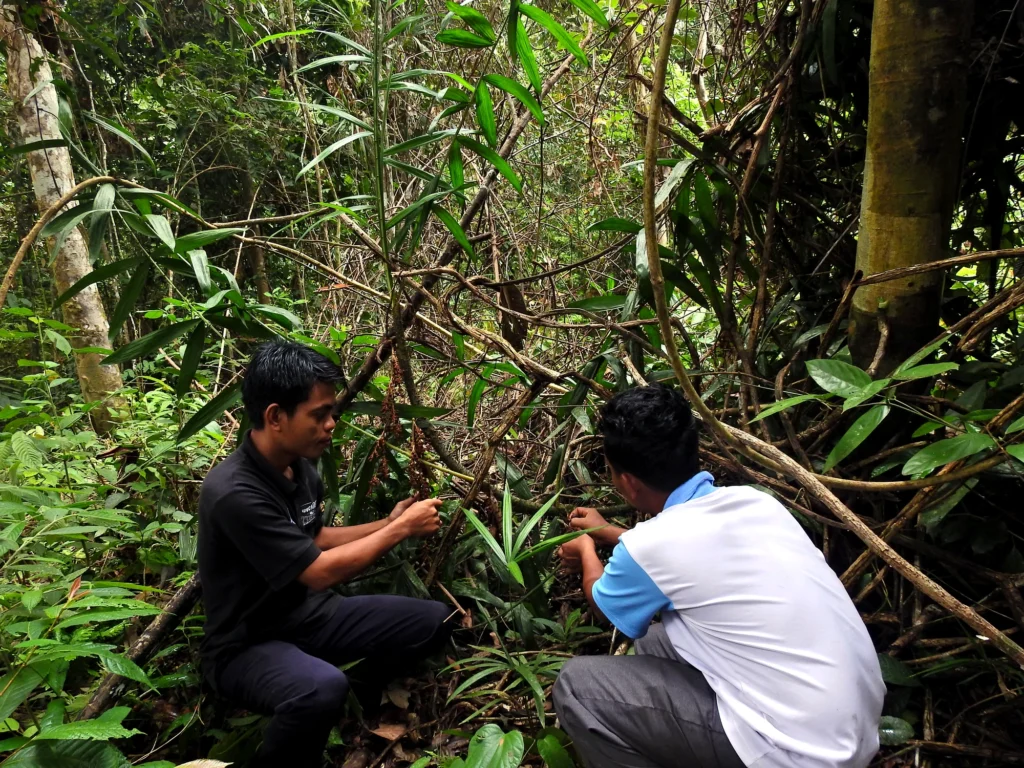
The following morning, the exchange moved into the jernang area. Participants observed different kinds of jernang and joined the harvesting activity with Bukik Ijau members. This was field learning in the most practical sense: identifying plants, seeing how fruit is collected and understanding the forest setting in which cultivation takes place.
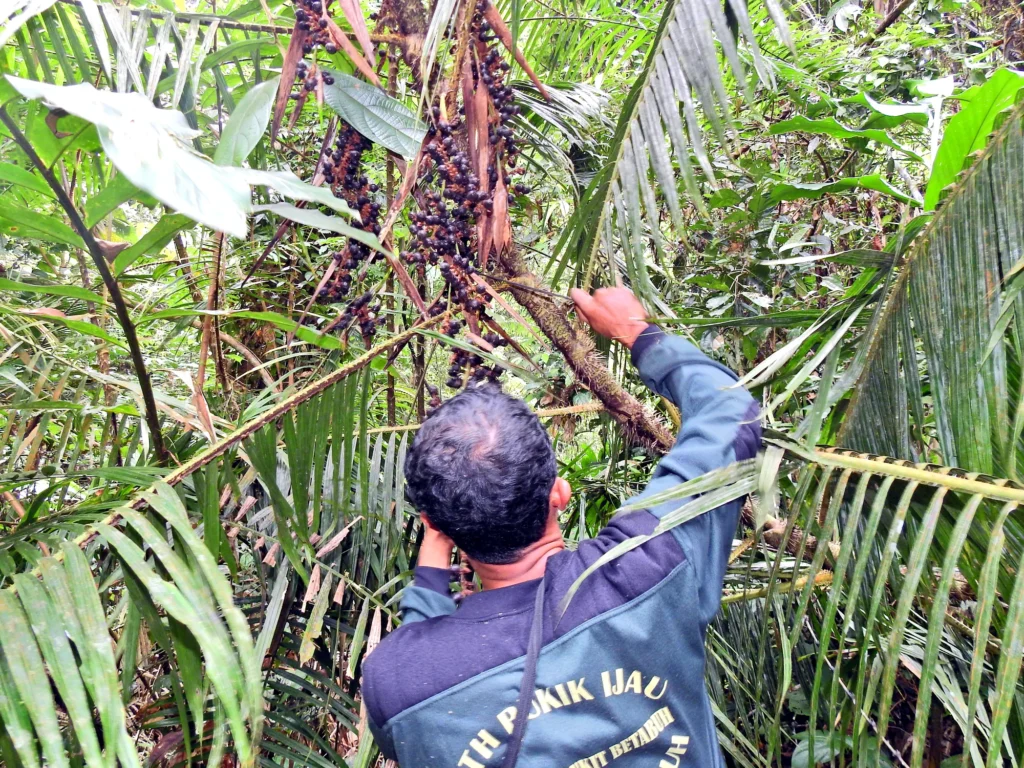
The harvest was a specific observation from that day, not a measure of annual production. Participants collected 13 kilograms of jernang fruit from four trees of Jernang Jantung and Jernang Pinang, yielding 1.5 kilograms of resin. They also harvested 5 kilograms of Jernang Beruk. The figures gave the group a concrete basis for discussing harvesting practice, processing and the potential of jernang, while avoiding assumptions about what a single field activity could mean for a household or for the wider landscape.
Learning moved in more than one direction. Community members shared practical knowledge built through cultivation and forest use. Visitors brought questions from their own landscapes and experience. Participants from outside Air Buluh, including neighbouring communities, used the exchange to consider what jernang management might mean in places facing their own changes in forest resources and access.
More Than a Forest Commodity
The field journey showed why a forest-based livelihood cannot be understood through a product alone. Jernang cultivation and harvesting depend on the surrounding forest, but they also depend on community organisation. Members need ways to share responsibilities, decide when and how to visit the site, maintain cultivation areas and respond when fruit is lost or stolen.
Security was one of the practical issues raised during the exploration. The route into the forest was demanding, and limited access could make it harder to maintain patrol coverage. Participants also discussed the need for reliable market information. Jernang offered a locally relevant opportunity, but decisions about expansion, processing or sale needed to be grounded in a clearer understanding of markets and prices. This is why livelihood development has to move at the pace of local capacity and experience, rather than through a model imposed from outside.
For Hutanriau, this practical learning was central to the initiative. The organisation worked alongside communities to strengthen what they were already developing: local institutions, spatial information, forest presence, jernang management and links with relevant forest-management bodies. The aim was not to separate livelihoods from conservation, but to examine how a livelihood rooted in standing forest could support a more durable relationship with the landscape.
Community Forest Management
Dragon’s Blood Tracks Exploration formed part of the wider RRI Air Buluh initiative, supported by the Rights and Resources Initiative through the Strategic Response Mechanism. Between October 2017 and March 2018, Hutanriau worked with KTH Bukik Ijau, KTH Sungai Manggis Sejahtera and KPH Singingi on participatory mapping, community organisation, non-timber forest products and social forestry preparation.
The exploration made these strands visible together. Discussions at the field post included KPH Singingi and other participants, creating space to relate local practice to the institutions involved in forest management. Earlier in the project, Bukik Ijau and Sungai Manggis Sejahtera had submitted documentation for the social forestry process. The journey did not resolve every institutional question, but it strengthened the practical conversations and relationships needed for longer-term community forest management.
Spatial evidence also mattered. Mapping helped community groups describe their management areas and discuss them with greater clarity. In the Bukik Ijau area, this work was paired with the routines that give a map meaning on the ground: visits, cultivation, patrols, discussion and the shared work of maintaining a group.
As the participants returned to Air Buluh, the meaning of Dragon’s Blood was larger than the fruit they carried. Jernang offered a practical reason to keep learning from the forest, to maintain community presence and to develop livelihood choices that do not require the forest to disappear. Its future remains connected to the standing vegetation that supports it, the organisations that care for it and the everyday decisions through which communities shape their relationship with Bukit Batabuh.
Explore the project
Explore Community Forest Management and Jernang-Based Livelihoods in Bukit Batabuh, the wider Air Buluh initiative and Hutanriau’s work with community forest groups in Bukit Batabuh.